Caffeine Citrate Injection USP 60mg/3ml Barista 3
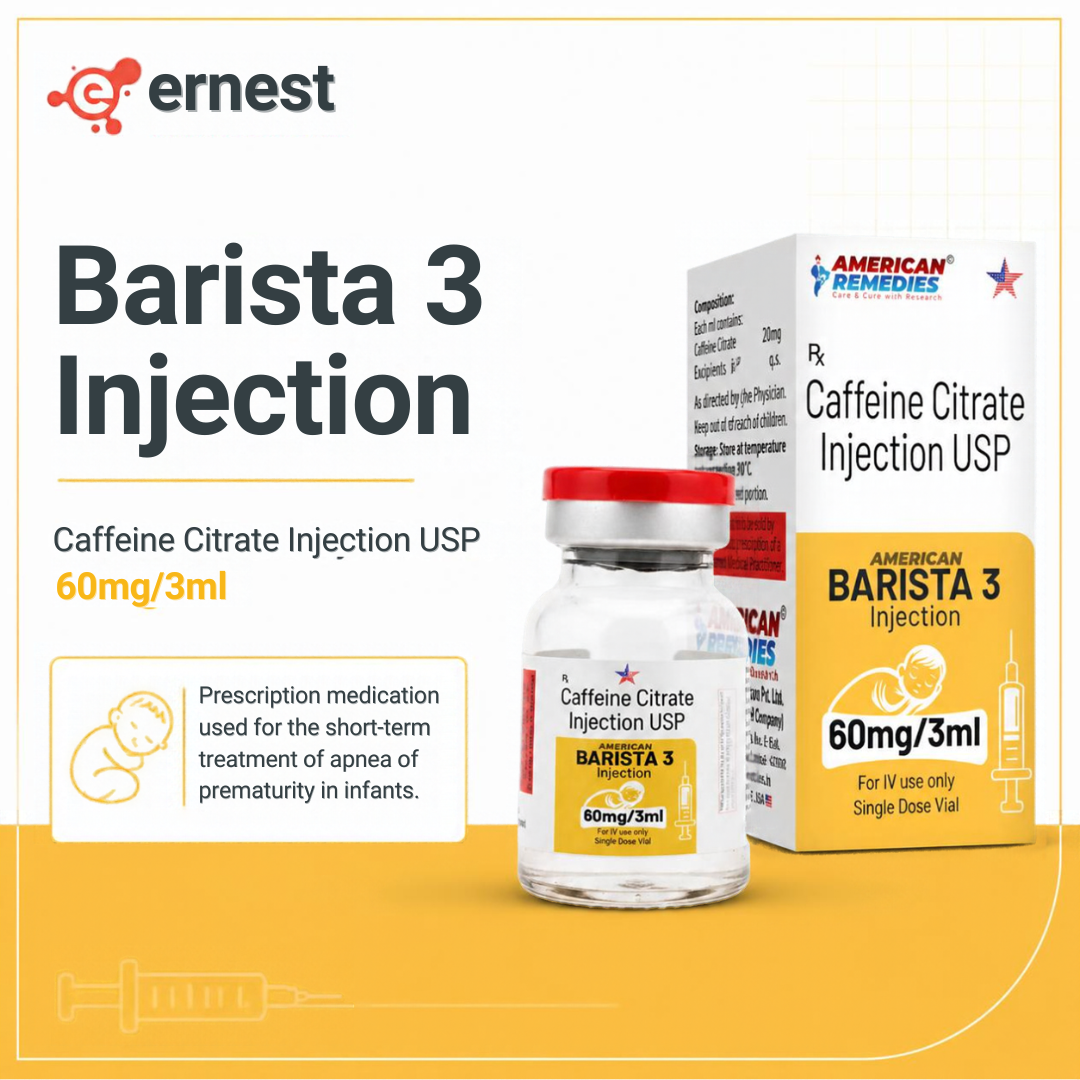
Barista 3 Caffeine Citrate Injection USP 60 mg/3ml is a prescription drug used to treat apnoea of prematurity in neonates for a brief period of time. This is a syndrome affecting premature babies whose breathing control is still developing and there are pauses in breathing. Caffeine citrate is utilised under the direction of a medical specialist to help treat these occurrences. Ernest Pharmaceutical Pvt Ltd invites product enquiries from importers, pharmaceutical distributors, wholesalers, hospital supply partners and healthcare procurement teams including buyers that serve the domestic market across India.
Recognising Its Role in Neonatal Care
Premature babies may need to be watched closely and treated in a neonatal intensive care unit (NICU). Doctors will first consider whether the pauses in breathing are caused by prematurity or by something else such as infection, anaemia or lung disease before prescribing caffeine citrate. For procurement teams, knowing the intended use of the medicine helps to ensure that a hospital requirement is matched to the right product, concentration and presentation.
Details Of Product
Specification Information
Barista Brand name 3
Product name Injection USP of Caffeine Citrate
Strength 60 mg/3 ml
Caffeine citrate concentration 20 mg/ml
Dosage form Injection
Therapeutic class Neonatal respiratory stimulant
Indications Short-term therapy of apnoea of preterm
Prescription drug status Prescription Drug
Administration By skilled health-care workers under specialist supervision
Clarification of strength: Caffeine citrate and caffeine base are represented differently. Caffeine citrate 20 mg/ml is the same as 10 mg/ml caffeine base. Errors in dosing can occur if prescribers and chemists fail to check which form is being used in the prescription. For manufacturer information, pack configuration, shelf life and storage requirements, please see current Barista 3 package and approved product insert.
How Does Caffeine Citrate Work?
Caffeine stimulates the central nervous system and helps to boost the impulse to breathe. Stimulation of respiratory centers and enhanced response to carbon dioxide are its effects. These actions help to explain its involvement in the management of apnoea of prematurity. CAFFEINE CITRATE injection, solution Key advantage The main therapeutic advantage is in helping to minimise bouts of apnoea in adequately selected preterm newborns. The neonatal team will review the response to treatment and if treatment needs to continue. NIH Administration and Safety Considerations
Barista 3 shall be administered as prescribed by the treating professional and in accordance with the approved instructions for the product. Dose is based on newborn weight and clinical condition.
Caffeine might boost your heart rate. Infants with cardiovascular disease, seizure disorders, or compromised renal or hepatic function require special care. The clinical team may monitor caffeine levels as required. NIH Premature newborns on caffeine citrate also need to be monitored for feeding difficulties and symptoms of intestinal illness, particularly necrotising enterocolitis. A causal association between caffeine citrate and this condition has not been demonstrated. Quality Checks Before Procurement For hospital medicine procurement and pharmaceutical wholesale supply purchasers should check:
- Identity of the product: The brand, composition, strength and presentation must correspond to the purchase request.
- Packaging integrity: Examine for damage to the outer packaging, container and seal.
- Batch traceability: Check batch number, manufacturing date, expiry date and manufacturer details.
- Remaining shelf life: Ensure it fulfils hospital/distributor acceptance guidelines.
- Supporting documents: Order only after clarification of requirements for invoice, batch documentation and certificate.
Storage and transport: See the conditions on the actual product label.
The inspections provide buyers with the opportunity to assess suitability and offer a record of traceability in procurement. Any Quality Certificate requested will be checked for availability and appropriateness to the batch given.
B2B Queries With Ernest Pharmaceutical Pvt Ltd
For neonatal care drugs, prescription injection supply or pan India pharmaceutical distribution inquiry, share:- Name and strength of the product
- Required number
- Destination country, or country of delivery- Minimum remaining shelf life acceptable
- Documents needed
Ernest Pharmaceutical Pvt Ltd can assess the demand and confirm availability, commercial conditions and required documents. Importers should additionally state destination needs so that feasibility of supply can be determined.
Frequently Asked Questions
1. What is the use of Barista 3 Caffeine Citrate Injection USP 60mg/3ml?
For the short-term therapy of apnoea of prematurity under specialised medical supervision. dailymed.nlm.nih.gov
2. What does strength 60mg/3ml mean?
This indicates that the indicated 3 ml presentation contains 60 mg of caffeine citrate, which gives a concentration of 20 mg/ml. See current product label.
3. Caffeine citrate–does it have the same potency as caffeine base?
No. Caffeine citrate 20 mg/ml is the equivalent to caffeine base 10 mg/ml. This difference is important in reviewing prescriptions and determining doses. dailymed.nlm.nih.gov
4. Can parents give Barista 3 injection at home?
This injection is given by qualified healthcare professionals on the advice of the treating doctor. It should not be left to parents to administer themselves.
5. How may hospitals/distributors place a procurement inquiry?
Contact Ernest Pharmaceutical Pvt Ltd for product name, strength, quantity, delivery location, shelf life need and documentation needed. Please confirm terms of availability and supply before ordering.
Summary
Barista 3 Caffeine Citrate Injection USP 60mg/3ml is used in neonatal care for a reason. Pharmaceutical purchasers verify the concentration, current label, batch information, remaining shelf life, and supporting paperwork to confirm that the procurement matches the receiving institution’s standards.