Documents US Pharmaceutical Importers Should Review Before Ordering Medicines
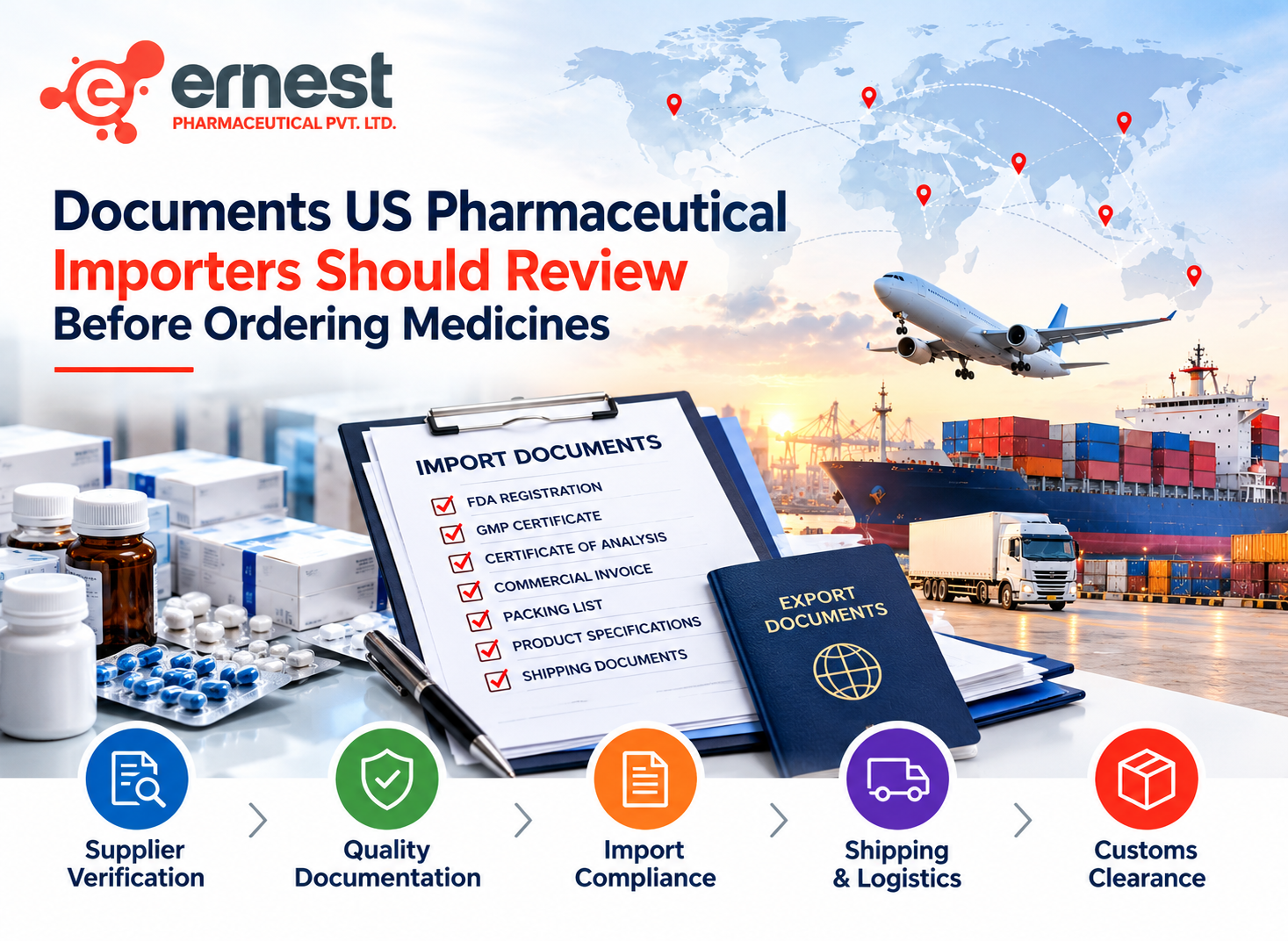
US pharmaceutical importers must review documents before ordering medicines
Getting medicines into the United States is more than finding a supplier and comparing prices. Pharmaceutical importers should also know which documents are required to verify the manufacturer, review medicine quality, and confirm the products meet applicable US regulations. Reviewing documentation before placing an order can help US pharmaceutical importers, medicine wholesalers, and pharmaceutical distributors identify potential compliance issues, avoid unnecessary shipping delays, and improve supplier selection. A supplier might have competitive pricing and the right products, but buyers still need reliable information about where the medicines are manufactured, how they are tested, and if they are legally permitted to enter the US market
Why Do We Need Document Verification in Pharmaceutical Importing?
Medicines must be handled with care during their manufacture, storage, transportation, and distribution. The quality of pharmaceuticals has a direct impact on patient safety and is regulated differently than many other commercial products.
Before completing the buy, buyers should verify if the supplier can provide accurate and relevant records.
Verification of proper medicine suppliers can help importers:
- Understand the manufacturer's regulatory status.
- Review product quality and testing information.
- Confirm medicine specifications before ordering.
- Identify missing or inconsistent documentation.
- Prepare for applicable customs and regulatory procedures.
- Reduce avoidable procurement and shipment risks.
Documentation does not guaranty product quality or regulatory approval. However, it gives buyers information they can independently verify.
1. FDA Establishment Registration and Drug Listing Information
One of the first checks for US pharmaceutical importers is whether the foreign manufacturing establishment meets applicable FDA registration requirements. Foreign establishments manufacturing certain medicines for the US market generally must register with the US Food and Drug Administration (FDA) and list applicable drug products. Importers should verify the manufacturer's establishment details and the relevant drug listing information and determine whether the records match the intended product. An important distinction is that FDA registration or drug listing does not mean a medicine is FDA-approved. Where product approval is required, buyers must separately verify the applicable authorization.
2. Documentation of Good Manufacturing Practice (GMP)
Good Manufacturing Practice (GMP) is the system for assuring that products are manufactured and controlled on a consistent basis to quality standards appropriate to their intended use. Importers may request available GMP-related documentation and review the manufacturer’s compliance history before placing an order. Some of the key areas are controls over manufacturing, quality assurance processes, equipment maintenance, personnel training, and documentation practices. Buyers should verify the scope, issuing authority, and validity of any GMP certificate submitted. For medicines imported into the United States, the applicable FDA current Good Manufacturing Practice requirements remain important, regardless of the location of the manufacturing facility, whether in India or elsewhere.
3. Certificate of Analysis (COA):
A Certificate of Analysis (COA) is a document that details the tests performed on a specific lot of a drug.
It helps buyers review if the tested product meets set specifications.
A COA can consist of, depending on the medicine:
- Batch number and name of product;
- References for manufacture or testing.
- Acceptance criteria and test parameters.
- Results from actual laboratory.
- Analytical methods or reference standards.
- Quality control approval.
For example, a tablet product may be tested for identity, assay, dissolution, and other relevant quality attributes. Importers should ensure that the COA is for the actual batch purchased and not for a different sample batch.
4. Technical specifications and product features
Before talking about bulk quantities, importers should know exactly what medicine they are offering. A product specification sheet is a way for the buyer and supplier to communicate clearly about the requested formulation.
Example: Medicine Product Specifications

5. Drug Approval and Marketing Authorization Records
Not every drug that is lawfully marketed in another country is automatically eligible for import for commercial distribution in the United States. Buyers may need to check for an FDA-approved New Drug Application (NDA), Abbreviated New Drug Application (ANDA), or Biologics License Application (BLA), depending on the product. Certain over-the-counter medicines may instead be marketed under applicable OTC monograph requirements. Buyers are advised to check the precise legal route for the product and transaction they are thinking of before placing an order. This step is particularly vital for importers sourcing medicines from international markets where local marketing approval doesn't automatically qualify it for the US market.
6. Commercial Invoice & Proforma Invoice
A proforma invoice is normally used at the quotation and order planning stage. It helps importers understand the commercial terms before they commit to a purchase. Buyers have to verify product description, quantity, unit price, total value, currency, payment terms, and agreed delivery conditions. A commercial invoice is generally prepared for the actual transaction, and it is an important part of customs documentation. Importers are to check that the details in the invoice agree with the order, product records, and shipment details.
7. Packing List and Shipping Documents
A packing list provides information about the goods included in a shipment. It can identify carton quantities, product descriptions, batch details, net weight, gross weight, and packaging dimensions. Other shipping records may include an Air Waybill (AWB) for air freight or a Bill of Lading (B/L) for ocean freight. The logistics team and customs representatives use these papers to identify the shipment and match it with commercial records. The final shipping documents are normally issued later in the transaction, but buyers should confirm documentation responsibilities before confirming the order.
8. Date of Expiry and Manufacturing Records
The expiry date of medicines is another important factor to consider when purchasing pharmaceuticals. The buyers should check the date of manufacture, date of expiry, and remaining shelf life of the proposed stock. This is particularly important when ordering products that may require longer international transit or take longer to distribute. For example, an importer that receives medicines with a limited remaining shelf life may have a reduced time window to supply those products through the intended distribution network. Reviewing batch and expiry details at an early stage can help avoid unsuitable inventory purchases.
9. Documentation for storage and transportation
Some medicines need to be stored under controlled conditions to preserve their quality. Buyers of temperature-sensitive products should review the supplier’s proposed transportation arrangements and the manufacturer’s approved storage requirements. Depending on the product, useful records may include temperature monitoring data, shipping validation information, and handling instructions. Importers should also say how they will deal with temperature excursions, damaged packaging, or delays in transport. This allows us to assess whether the planned logistics process is suitable for the medicine.
10. Supplier's business and distribution credentials
Besides the product documentation, buyers should also check the company that supplies the medicines. A basic verification process for a pharmaceutical supplier may include checking business registration details, relevant trade authorizations, the supplier’s relationship with the manufacturer, and any quality system information available. US buyers also should determine whether their proposed wholesale distribution activities will require applicable state licenses or other authorizations. If the supplier is a trading company (not the actual manufacturer), the importer should explicitly identify the manufacturing establishment and other relevant supply chain participants. Transparent supplier information provides buyers a clear picture of who is responsible for manufacturing, documentation, and delivery.
Pharmaceutical Import Document Checklist for US Buyers
[1] Verify the actual manufacturer and supplier identity.
[2] Verify applicable FDA registration and drug listing.
[3] Confirm the product's eligibility for US regulation.
[4] Review GMP-related information and quality history
[5] Request the relevant batch COA
[6] Confirm product strength, dosage form, and packaging
[7] Check the batch number and remaining shelf life.
[8] Review commercial terms and invoice details
[9] Confirm storage and transportation requirements
[10] Clarify customs, shipping, and document responsibilities
Common Documentation Mistakes Pharmaceutical Importers Should Avoid
Even experienced buyers may encounter documentation problems when working with a new supplier. A common mistake is to assume that because a manufacturer is registered with the FDA, all of the drugs it makes are lawful to sell in the United States. Another common mistake is checking a sample COA without verifying that the actual batch shipped has matching test records. Inconsistent product names, incorrect strengths, missing manufacturer details, and differences between invoices and packing lists can also create unnecessary complications. Importers should resolve such discrepancies before shipment wherever possible. The FDA explains that incomplete or inaccurate entry information may delay review or result in further examination of imported medicines.
How Can Proper Documentation Benefit Pharmaceutical Importers?
A structured document review process can support several practical business goals. Enhanced Supplier Evaluation: Buyers can review manufacturers based on verified information, not just on their quotes. Improved purchasing decisions: Clear specifications help ensure the ordered medicine matches the buyer's requirements. Stronger quality oversight: Batch testing and manufacturing information support informed quality reviews. More organized shipments: You can reduce avoidable discrepancies by keeping consistent commercial and logistics records. Long-term supplier relationships: Clear documentation expectations help buyers and suppliers establish reliable communication. These benefits are particularly useful for businesses that have regular orders for pharmaceuticals internationally.
Pharmaceutical Sourcing from India for US Buyers
India is an established international manufacturing and sourcing market for pharmaceutical products. While US companies may be open to sourcing pharmaceuticals from India, the assessment will be based on the manufacturer, the medicine, quality documentation, and US regulatory eligibility. Importers should avoid assuming that a product can enter the United States simply because it is commercially available in India. Before ordering, buyers should verify the relevant FDA requirements, confirm product details, and clarify documentation responsibilities with the supplier. At Ernest Pharmaceutical, the value of clear product information, accurate communication, and responsible documentation can be put into the larger context of pharmaceutical sourcing. Buyers should verify all applicable requirements independently before buying or importing medicines.
Frequently Asked Questions (FAQs)
1. What documents should US pharmaceutical importers verify before ordering medicines?
Buyers should check applicable FDA registration and drug listing information, product approval status, GMP-related records, product specifications, and relevant quality documents such as a batch COA. Commercial and shipping records should also be planned before shipment.
2. Is an FDA registration certificate enough to import medicines into the USA?
No. Registration of an establishment does not equal approval of a product or legal admissibility of a medicine. Other requirements may include drug listing, applicable approval or OTC monograph compliance, labeling, and CGMP compliance.
3. Why is a Certificate of Analysis important for medicine importers?
A COA provides testing information specific to a batch. It enables buyers to determine whether the medicine tested complies with set quality specifications and if the results apply to the batch they are buying.
4. Can US pharmaceutical wholesalers order medicines directly from Indian suppliers?
A US business may purchase medicines internationally, but any commercial importation and distribution must comply with applicable federal and state requirements. Proper verification of the manufacturer, product, importer, and supply chain arrangements must be undertaken.
5. How can pharmaceutical importers reduce documentation problems before shipment?
Importers can use a standard document checklist, confirm product and manufacturer information, compare records for consistency, review applicable regulatory requirements, and resolve missing information before dispatch.
Conclusion
Successful pharmaceutical importing starts well before medicines are packed and shipped. For US pharmaceutical importers, reviewing the right documents is an important part of understanding supplier reliability, product quality, regulatory eligibility, and shipment requirements. From FDA registration information and GMP documentation to Certificates of Analysis, product specifications, and commercial records, each document serves a different purpose in the purchasing process. A careful review helps importers make informed decisions and establish clearer expectations with international suppliers. For businesses exploring international pharmaceutical sourcing, documentation should be treated as an essential part of supplier evaluation rather than a final administrative step.