Branded vs Generic Medicines: A US Buyer's Guide
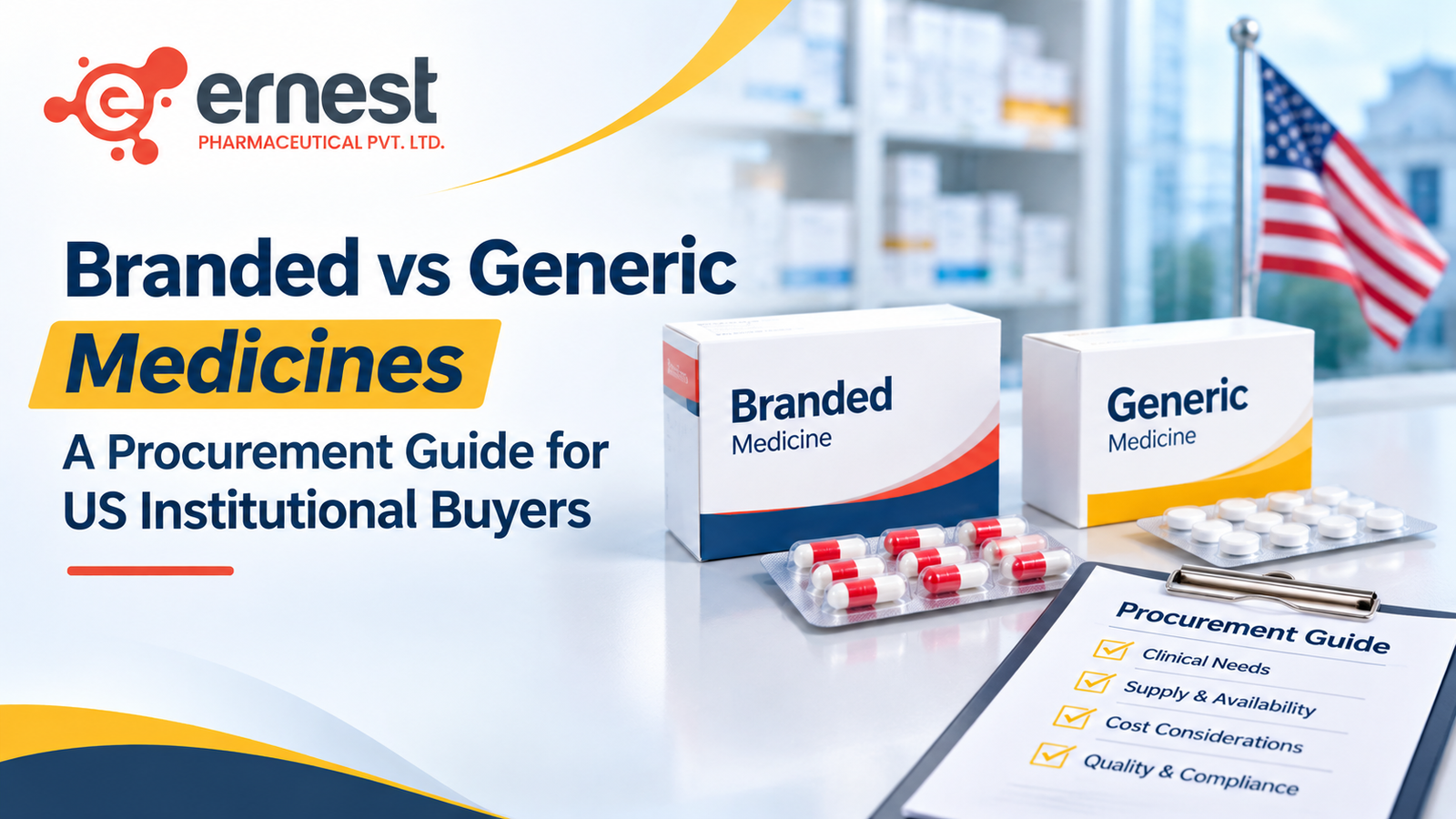
Branded vs Generic Medicines: A Procurement Guide for US Institutional Buyers
Introduction
Choosing between branded and generic medicines is an important decision for hospitals, healthcare institutions, pharmacies, distributors, and pharmaceutical procurement teams. While both options may serve similar treatment requirements, they can differ in pricing, manufacturer, product availability, and procurement considerations.
For institutional buyers, the decision involves more than comparing the purchase price. Product approval status, therapeutic equivalence, supplier reliability, quality documentation, and long-term supply availability must also be considered.
Branded vs. Generic Medicines Procurement helps purchasing teams to make knowledgeable sourcing decisions while managing budgets, product requirements, and supply continuity.
This guide examines some of the key differences between branded and generic medicines and what US institutional buyers should think about before placing pharmaceutical orders.
What Are Brand Name vs Generic Drugs?
Branded Medicines
Branded medicines are pharmaceutical products marketed under a proprietary brand name by a manufacturer or marketing authorization holder.
These products are usually linked to the first development and approval of a medicine. They may have manufacturer requirements, product specifications and brand preferences that must be met in their procurement.
Institutional buyers prefer branded medicines when:
- The institution has a policy that requires a specific brand.
- A physician or healthcare protocol recommends or prescribes a specific product.
- Contractual purchasing arrangements are bound to a particular manufacturer.
- Must be consistent with the current inventory.
Generic medicines have the same active ingredient as the corresponding reference brand-name medicines and must meet the applicable regulatory requirements for strength, dosage form, route of administration, quality and bioequivalence.
The generics approved by the FDA are tested to make sure they work properly against their reference products.
Generic medicine procurement USA is often considered by institutional buyers looking for cost-effective purchase options, without sacrificing the applicable quality and regulatory standards.
Differences Between Branded and Generic Medicines in Procurement
Institutional buyers should consider both product categories depending on their buying needs.
1. Cost of Purchase
Branded medicines are likely to cost more due to research and development, marketing and commercial positioning.
Generic medicines are often less expensive to buy because generic manufacturers generally do not have to repeat the clinical development process that was done originally.
Institutional buyers may find generic sourcing useful to mitigate procurement expenditure, especially when buying in large volumes.
2. AVAILABILITY OF PRODUCTS
Availability may vary according to manufacturer, demand in the market, ability to produce and distribution plans.
Branded products may have limited sourcing options when a particular manufacturer is specified.
Generic medicines may have many manufacturers and suppliers but you should always check that the strength, dosage form and quantity you need are available.
3. Choosing a Manufacturer
Purchasing branded medicines might mean buying from a manufacturer or its authorized distribution network.
4. Therapeutic Equivalence
Although generic purchasing may offer more choices of manufacturer, each institutional buyer should conduct an independent assessment of the status, quality information, and supplier documentation for each manufacturer's product.
FDA-approved generic drugs must meet the appropriate criteria for pharmaceutical equivalence and bioequivalence.
But institutional buyers should not assume that all drugs containing the same active ingredient are interchangeable.
The FDA Orange Book contains therapeutic equivalence evaluations for eligible multisource prescription drug products.
5. Supply Chain Resilience
Supply reliability is important for hospitals, pharmacies, healthcare institutions.
What US Institutional Buyers Should Assess Before Buying
When choosing a product, procurement teams should assess manufacturer capacity, supplier communication, inventory availability, lead times, and alternative sourcing options.
Organized procurement processes assist institutions to better compare branded and generic products.
1. Product Characteristics
Before you ask for price quotations, clearly define your product specifications.
Review:
- Generic and brand name, if applicable.
- Active principle.
- Strength required.
- Form of release.
- Way of administration.
- Packaging type.
- Number required.
- Preferences of manufacturers.
Purchasing decisions based on a comparison of products with different strengths, dosage forms or package configurations may not be correct.
2. FDA Approval and Product Status
If you are sourcing medicines for the US market, check the regulatory verification first.
It is up to the institutional buyers to determine if the particular product has the appropriate FDA approval or appropriate regulatory pathway.
Here are some useful resources:
- Learn about the FDA generic drug approval process at FDA Generic Drugs Information.
- FDA Orange Book for reviewing approved drug products and therapeutic equivalence evaluations
Importation or distribution in the United States is not necessarily allowed for a medicine that has been approved or marketed in another country.
3. Supplier verification
Supplier verification is crucial when purchasing either branded or generic medicines.
Buyers should check:
- business info for legal reasons.
- Licenses and registrations required.
- Manufacturer details
- Distribution authorization, if applicable.
- Availability of product.
- Provide history.
- Practices of Documentation.
Buyers should also verify authorized trading partner status for applicable US prescription drug transactions.
The FDA has guidance on checking the licensure of wholesale drug distributors and third-party logistics providers: https://www.fda.gov/drugs/drug-supply-chain-integrity/check-licensure-wholesale-drug-distributors-and-third-party-logistics-providers
4. Quality Documentation
Procurement teams should check the relevant product and quality documents before confirming an order.
These may include:
- Specifications of the product.
- Certificate of Analysis (C of A), if applicable.
- Batch/lot information.
- Manufacturing and expiry date.
- Quality documentation for applicable manufacturing.
- Information on packaging and labeling.
- Storage requirements.
The COA should match the actual batch being supplied.
If you need more help with buying, read our article on pharmaceutical procurement quality checks and cost control.
How to Compare Cost of Brand vs. Generic Medicine Procurement
Price is important, but the cheapest quote isn't always the best buy.
Institutional buyers should consider the total cost of procurement.
Think of:
- Unit price: Check the price per tablet, capsule, vial, etc.
- Minimum order quantity: Find out what the supplier’s minimum order requirements are.
- Shipping costs: Include transportation and insurance costs if any.
- Storage requirements: Account for extra costs for items that need certain temperatures.
- Remaining shelf life: Determine the risk of inventory losses due to expiry.
- Payment terms: Review payment terms and transaction fees applicable.
- Reliability of supply: Can the supplier meet recurring demand?
For example, a generic medicine that is cheaper might give you some buying advantages, but those advantages should be weighed up against the reliability of the supplier, the eligibility of the product and the delivery requirements.
Similarly, a branded medicine may be justified in its higher purchase price if a specific brand is necessary due to institutional policy or clinical protocol.
Regulatory and Import Considerations for US Buyers
Institutional US buyers who import medicines from abroad should understand that product choice and import eligibility are distinct issues.
The FDA requires imported human drugs to meet all applicable federal requirements.
Depending on the product and the transaction, these may include:
- Requires drug application or approval.
- Registration of a foreign establishment.
- Listing of drugs.
- Accurate tagging.
- Current requirements for good manufacturing practice.
- Import relevant documentation.
To assess an international sourcing arrangement, check out the FDA's General Requirements for Importing Human Drugs.
In addition, applicable prescription drug transactions may be subject to requirements under the Drug Supply Chain Security Act (DSCSA) including product tracing and authorized trading partner obligations.
These requirements should be evaluated based on the medicine, the transaction and the legal role of each organization.
How Ernest Pharmaceuticals Simplifies B2B Pharmaceutical Sourcing
“Reliable pharmaceutical procurement depends on clear product information, communication with suppliers and appropriate documentation.
Ernest Pharmaceuticals presents information about its pharmaceutical business and product categories available for domestic and international business inquiries.
Institutional buyers can review the Ernest Pharmaceuticals product portfolio as they consider pharmaceutical sourcing needs.
For more information on how the company operates and its pharmaceutical business, see the company background and pharmaceutical business information.
Buyers should discuss product specifications, manufacturer details, availability, batch information, applicable quality documents and regulatory requirements before purchasing.
Buyers may also want to check out the Ernest Pharmaceuticals pharmaceutical insights and procurement guides for more extensive procurement information.
Summary
A systematic approach to pharmaceutical procurement is necessary for the purchase of medicines, whether they are branded or generic.
Cost savings can be achieved with generic medicines, but branded medicines may be needed for specific product or institutional requirements.
Before placing orders, US institutional buyers should evaluate product specifications, FDA approval status, therapeutic equivalence, reliability of the supplier, quality documents and overall cost of procurement.
A well-designed branded vs generic medicines procurement strategy enables healthcare organizations to make informed purchasing decisions while supporting product quality, regulatory compliance and supply continuity.
Frequently Asked Questions
1. What Is the Difference Between Branded and Generic Medicines?
Branded medicines are sold under a proprietary brand name. Generic medicines are copies of reference medicines that are approved and meet the applicable requirements for active ingredients, strength, dosage form, quality and bioequivalence.
2. Are generic medicines as good as branded medicines?
Generic medicines approved by the FDA must show pharmaceutical equivalence and bioequivalence that apply to their reference products. With appropriate substitution they should have identical clinical benefit and safety profile.
3. Why Are Generic Drugs Less Expensive?
Generally, generic manufacturers do not have to repeat the entire clinical development process of the original brand drug. This can lower development costs and enable generic medicines to be priced lower.
4. How can U.S. institutional buyers verify generic drugs?
Buyers should check the FDA approval information, any applicable Orange Book therapeutic equivalence evaluations, manufacturer information, product specifications and relevant quality documentation.
5. Are Generics Always the Way to Go for Hospitals?
"Not necessarily. When making purchasing decisions, institutional policies, clinical needs, product availability, regulatory status and reliability of suppliers should be considered. The best choice is determined by the particular medicine and the buying requirements.
6. What documents should buyers ask for before buying medicines?
Buyers may request product specifications, COA per batch, manufacturer information, applicable quality documents, labeling information, and any relevant regulatory and shipment documents depending on the product and the transaction.
7. Is it possible to import drugs approved in other countries into the USA?
No. Approval in another country does not necessarily mean it will be eligible for import into the US. Imported medicines must comply with applicable FDA requirements including those for product approval, registration, listing, labeling, and manufacturing.
8. What is the FDA Orange Book?
The FDA Orange Book is a database of approved drug products with therapeutic equivalence evaluations. It assists healthcare providers and purchasing organizations to review eligible multisource prescription drug products and their therapeutic equivalence codes