Pharmaceutical Product Specifications: UK Buyer Checklist
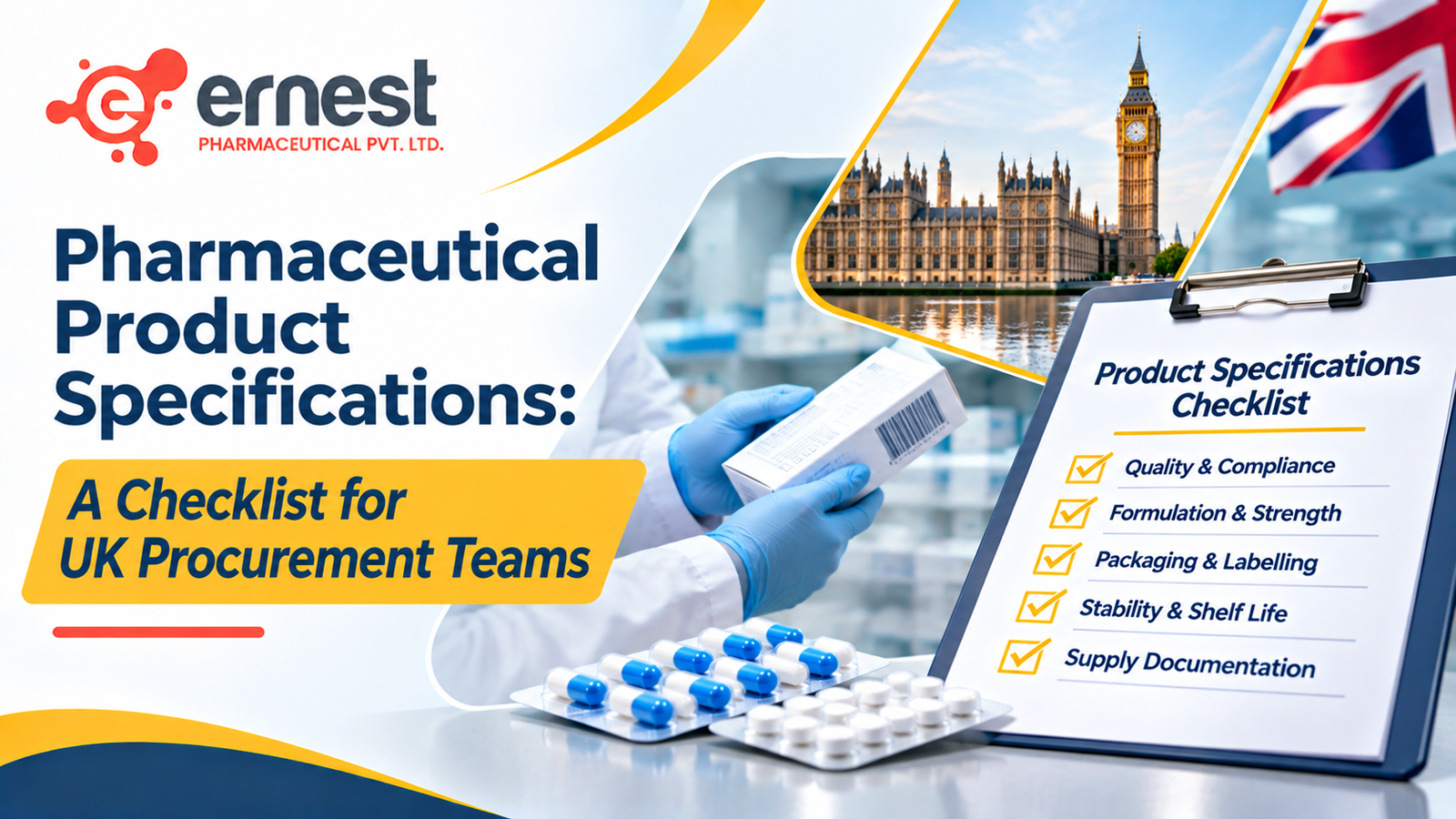
Pharmaceutical Product Specifications: A Checklist for UK Procurement Teams
Pharmaceutical procurement involves more than selecting a medicine and agreeing on its price. Before placing an order, procurement teams need to confirm exactly which product is being purchased, whether its specifications meet the intended requirements, and whether the supporting documentation is accurate and complete.
A missing strength detail, incorrect dosage form, unsuitable pack size, or mismatch between product documents can create problems during purchasing, quality review, and supply. These issues can be particularly important when procurement involves international suppliers, multiple manufacturers, or products intended for the UK market.
A pharmaceutical product specification checklist can assist procurement experts in arranging the information they require before finalizing an order. It gives a systematic means of reviewing medicinal identification, composition, strength, dosage form, packaging, storage conditions, manufacturer details, quality records and essential regulatory information.
In addition to the applicable Medicines and Healthcare products Regulatory Agency (MHRA) requirements, the medicine’s marketing authorization where relevant and the responsibilities of the organizations involved in the supply chain, UK procurement teams should also consider product specifications.
This article outlines the important elements of medical product specifications that purchasers should confirm before placing orders for pharmaceuticals.
1. What is a Drug Product Specification?
A pharmaceutical product specification is a recorded definition of identity, content, physical features, quality requirements and other pertinent product information.
It makes clear to the customers, suppliers, manufacturers and quality teams what product is asked for and what specifications need to be fulfilled.
A specification may include: Depending on the drug and procurement arrangement:
- Product name: the generic name, trade name or other permitted product identification.
- Active pharmaceutical ingredient: The active ingredient(s) in the medicinal product.
- Strength: The quantity or concentration of active ingredient in a defined unit or volume.
- Form of dosage: Whether the product is in tablet, pill, injectable, cream, solution or other form.
- Composition: Active and inactive substances, if applicable.
- Pack configuration Number of units, type of container and package presentation
- Storage conditions : Recommended conditions to maintain product quality.
- Shelf life: Expiration time applicability and remaining shelf-life expectations.
- Manufacturer information Manufacturer and applicable manufacturing-site information.
- Quality requirements: Applicable specifications, test criteria, and supporting documents.
A product specification is different to a Certificate of Analysis (CoA). Specification : description of the needed or approved product attributes . CoA : document recording analytical data for a given batch . Both documents may be significant for pharmaceutical procurement.
2. Verify Active Ingredient and Product Name
So when you analyze a medicinal product specification, you start with identity.
Procurement teams must identify whether the required medicine is listed by its generic name, brand name or both. When preparing an order, inadequate information can lead to misunderstanding between similar product names or distinct brand presentations.
There should be unambiguous identification of the active substance.
Order Confirmation – Please Check:
- Exact name of the active or generic component.
- Brand name (if appropriate)
- Number of active components in the combined products.
- Correct spelling and product identification.
- Match between quotation, purchase order and product specification.
- Will the offered product fulfilll the planned purchase requirement?
Check each active ingredient separately for combo medications. A product comprising two active chemicals should not be considered equivalent to a product containing only one.
If the product is clearly identified, the chances of ordering the wrong drug or of receiving quotes for multiple items are reduced.
3. Check Strength, Dosage Form & Composition
Strength and dose form are important components of pharmaceutical product requirements. Two products can have the same active ingredient, but differing strength, formulation or route of administration.
For instance, a medicine may be provided in several strengths of tablets or in oral and injectable forms. These presentations have a common active component and should not be considered interchangeable.
Procurement teams need to check:
- Strength: Check the amount or concentration of each active ingredient listed.
- Dosage form: Verify whether the medication is a tablet, capsule, injectable, cream, suspension, or other form.
- Route of administration: Intended route applicable to the product; Review when applicable.
- Composition: Check the active substances and pertinent formulation specifics.
- Release characteristics: Specify if the product is immediate-release, modified-release, or has additional special features as appropriate.
These details should be in line with the product ordered by the purchasing entity.
When a supplier offers an alternative product, procurement teams should get the proper documentation and report the suggested substitution to the appropriate clinical, pharmacy, regulatory, or quality professionals. The fact that two goods have a similar name or strength does not make them interchangeable.
4. Check the Packaging and Label Information
Packaging and labeling are crucial aspects of medicinal product identification . They allow buyers to understand how a medicine is presented, kept, handled and identified across the supply chain.
The specification should contain sufficient information to define the expected configuration of the package.
Look at the following information:
- Primary packaging, such as a blister, bottle, vial, ampoule or tube.
- Secondary packing such as cartons or outside boxes.
- Quantity of tablets, capsules, vials or other units in a pack.
- Pack size and amount supplied.
- Name and strength of the product on the package.
- Batch or lot identification systems.
- Manufacturing and expiry date information.
- Storage and Handling.
- Patient Information Leaflet and Product Labeling Requirements.
For medications for the UK market, packaging and labeling must be examined in relation to the necessary product authorization and the applicable UK requirements.
The MHRA gives advice on medications packaging, labeling and patient information leaflets. Buyers should not assume that packaging accepted in another market would automatically be adequate for the UK but should apply the relevant rules for the particular medicine.
5. Review the product’s regulatory information for the United Kingdom
Regulatory status is an important feature of pharmaceutical product procurement. While a product specification may describe the medicine precisely, this does not, by itself, ensure that the product is authorized or acceptable for the intended channel of supply in the UK.
Regulatory information relevant to the product and transaction should be identified by procurement teams.
Review, subject to medicine and supply arrangement:
- Where applicable marketing authorization details.
- Details about product licensing or approval.
- Authorized presentation and relevant product name.
- Details of marketing authorization holders when appropriate.
- Product information approved.
- Import or provide permissions as appropriate.
- Any limits or requirements applicable to the proposed procurement route.
The MHRA’s service Products provides access to information about medicines. This allows users to search for pharmaceutical information, including Summaries of Product Characteristics (SmPCs), Patient Information Leaflets (PILs) and public assessment reports where accessible.
The SmPC is particularly useful to healthcare professionals, because it provides information about the qualities of the medicine and how it should be used. The procurement and quality teams can view the relevant product information to determine whether the details of the proposed product are consistent.
Regulatory requirements can differ depending on the product type, authorization status and the intended supply arrangement. Where the proper method is unclear, buyers should seek the advice of suitably experienced regulatory authorities.
6. Review Essential Pharmaceutical Quality Documents
Review the product requirements against the accompanying quality and manufacturing documentation. These documents have diverse objectives and Procurement teams need to know what each one says.
Depending on the goods and the transaction, the applicable documents may include:
- Product specification sheet: A description of the qualities of the designated product, and the quality requirements applicable.
- Certificate of Analysis (CoA) – A record of analytical test results for an identified batch.
- GMP Documentation: Evidence of the relevant Good Manufacturing Practice status of a manufacturing plant.
- Manufacturer details: Indicates the manufacturer and location of manufacture of the product.
- Stability data: Useful to know the storage conditions and shelf life of the product.
- Product labeling and packaging information: helps to confirm the presentation offered and appropriate instructions.
- Regulatory documents: Information on applicable authorizations or approvals.
- Batch related records: Allows identification and traceability of the provided product.
Compare the Certificate of Analysis to the actual batch offered or supplied. Buyers are advised to check the product name, strength, batch number, specifications, test results and related dates.
GMP documentation also should be reviewed thoroughly. A document on another manufacturing site or an unrelated activity does not confirm the status of the facility manufacturing the requested medicine.
For further assistance, read the article from Ernest Pharmaceuticals on verification of pharmaceutical Certificate of Analysis.
7. Check Storage Conditions and Shelf-Life Requirements
Storage conditions are key aspects in the product specification as medications need to be handled according to their relevant requirements.
Procurement teams cannot presume that all pharmaceutical goods can be stored in the same way. Some drugs need to be stored at a controlled ambient temperature while others need refrigeration or special protection from light or moisture.
Before you order, please check:
- Storage temperature recommended.
- Keep away from light or moisture, if appropriate.
- Special handling instructions.
- Whether refrigeration or other controlled storage is needed.
- Product expiration date and remaining shelf-life.
- Any applicable transport or distribution conditions.
Remaining shelf life in bulk procurement demands special consideration. A product may have a valid expiration date, but not enough useable shelf life for the buyer's inventory cycle, distribution plan or institutional needs.
Procurement teams should agree their minimum acceptable remaining shelf life before placing an order, and ensure the supplier can meet the need.
The MHRA’s Good Manufacturing Practice and Good Distribution Practice advice sets out the need to maintain product quality and handle medicines under suitable conditions in line with the relevant marketing authorization or product specification.
8. Verify manufacturer and supplier information
The whole specification of the pharmaceutical product should be backed up by credible information on the maker and the supplier.
The organization supplying a medicine may not be the original manufacturer. The procurement teams need to comprehend the link between the supplier, manufacturer, exporter and other stakeholders engaged in the transaction.
Check the following:
- Manufacturer’s legal name.
- Product manufacturing facility.
- Supplier and distributor information.
- Relevant licenses or authorizations for the activity undertaken.
- Proper GMP/quality documentation.
- Sourcing of product and supply chain arrangements.
- Contact Information for Documentation and Quality Issues.
It is the responsibility of the Purchaser to ensure the documentation is for the proper organization and manufacturing site. They also must determine who is accountable for answering inquiries about product quality, errors in documentation, and complaints.
For more general purchasing advice, check out Ernest Pharmaceuticals’ guide to quality checks and cost management in pharmaceutical procurement.
9. Checklist for Product Specification for Pharmaceutical Before Order
Procurement teams can use the following checklist to arrange their review before approving a pharmaceutical purchase.
Product identification
- Confirm generic and brand name if applicable.
- Check all active substances.
- Refer to the requested product presentation.
Formulation and strength
- Kindly confirm the correct strength.
- • Verify dosage form and route of administration if appropriate.
- Review make up and release attributes as applicable.
Packaging and labeling
- Check for package size and unit configuration.
- Please confirm specifics about primary and secondary packing.
- Review product labeling and other pertinent patient information.
Regulatory Info
- Determine the appropriate UK regulatory status.
- Review necessary marketing authorization information if appropriate.
- Match product details against the MHRA product information provided.
Quality documentation
- Please provide correct product specification.
- Review the batch specific CoA if applicable.
- Check manufacturer and manufacturing site information.
- Review relevant GMP and stability paperwork.
Storage and shelf-life
- • Check storage and handling conditions
- Check the production and expiry dates if available.
- Minimum shelf-life standards left to be agreed.
Vendor Qualification
- Confirm the supplier’s identification and any required authorizations.
- Understand the sourcing set up.
- Define accountability for quality and documentation problems.
This checklist should be updated to reflect the medicine, procurement arrangement and applicable regulatory requirements. Not all documents will be relevant to all products.
10. Common Product Specification Errors to Avoid
Avoidable procurement problems may arise from incomplete or inconsistent product information. Common problems include:
- Check the name, not the strength Products containing the same active ingredient can be different strengths.
- Skipping dose form: A tablet, capsule and injectable formulation are alternative presentations.
- Accepting a general CoA The certificate of analysis should be specific to the batch being given.
- Pack configuration ignored: Wrong pack size might impact ordering, stock management and distribution.
- GMP document must be site and scope relevant . Assuming a GMP document applies to all sites .
- Failure to consider storage conditions: Before shipping, the handling requirements of the product should be known.
- Not setting expectations for shelf life: The minimal remaining shelf life should be agreed upon by buyers prior to order confirmation.
- Overseas packaging meets UK requirements automatically: Review the UK rules relevant to the product and route of supply.
A methodical evaluation of the specification helps to catch these problems before they impact purchase or delivery.
Last thoughts
A pharmaceutical product specification checklist provides UK procurement teams with a practical way of ensuring what they are buying and what supporting documentation should be checked before an order is made.
The most significant fields are product identification, active ingredients, strength, dosage form, packaging, regulatory information, quality documents, storage conditions, shelf life and supplier information.
“Product specifications should not be considered in isolation. These should be read in conjunction with the relevant batch records, Certificates of Analysis, manufacturing information and applicable UK regulatory requirements.
Whether dealing with domestic or overseas suppliers, a consistent procedure for reviewing documentation can assist eliminate product mismatches, discover missing information and promote more informed purchase decisions.
Questions & Answers
1. What is a specification for a pharmaceutical product?
A pharmaceutical product specification is a document which specifies the identification, composition, strength, dosage form, packaging and the quality requirements applicable to a medicine. It assists buyers and quality teams to verify what is being bought.
2. What should a medical product specification cover?
This may comprise the name of the product, active ingredients, strength, dose form, composition, packaging details, storage conditions, shelf – life information, manufacturer data and pertinent quality requirements.
3. Is a product specification the same as a Certificate of Analysis?
No. The product specification defines the needed attributes of the product and the acceptance criteria. A Certificate of Analysis is a record of the analytical results for a given lot against the appropriate specifications.
4. Why MHRA product information should be on the radar of UK procurement teams
MHRA product information can allow buyers to evaluate relevant medical information including the SmPC and PIL, and to validate product information against the planned procurement requirements. The product and supply route dictate which regulatory checks are appropriate.
5. What quality documentation should pharmaceutical buyers request?
Depending on the product and transaction, buyers may ask for a product specification, batch-specific CoA, necessary GMP documents, manufacturer information, stability information, and any regulatory records.
6. Why is it vital to check the batch number?
A batch number links a drug to its manufacturing and quality records. Cross-referencing it with the CoA, packaging and shipment documents helps enhance traceability and identify documentation inconsistencies.
7. Should purchasers verify the remaining shelf life before placing an order?
Okay. Buyers should determine their minimum acceptable remaining shelf life and verify that the product delivered can match the criterion. This helps with stock planning and also with avoiding getting products with insufficient usable shelf life.
8. Can a drug be confirmed as authorized in the UK using a supplier’s product specification?
Nope. A product specification sets out product information and requirements but does not in itself grant UK marketing authorization or eligibility for a particular route of supply. Check the relevant regulatory information separately.
A Note To Pharma Procurement Teams
Reliable pharmaceutical sourcing is built on accurate documentation and explicit product needs. Before placing an order, procurement teams need to check the product specification, relevant quality records, supplier information and any regulatory requirements.
Ernest Pharmaceuticals Information on the pharmaceutical business and the accessible product portfolio. Customers can browse the company’s pharmaceutical items and discover more about Ernest Pharmaceuticals.
For business inquiries regarding product availability, specifications and pharmaceutical supply requirements, please go to the Ernest Pharmaceuticals contact page.
Disclosure of Regulator
This page is for general educational and informational purposes only. It is not legal, medical or regulatory advice. The pharmaceutical product specifications, documentation requirements and authorization conditions may differ depending on the medicine, the intended market and the supply arrangement. Buyers should check current requirements with the MHRA and take advice from adequately certified pharmaceutical quality and regulatory professionals prior to any procurement.