
Eating Clean but Still Have Belly Fat? 9 Reasons Why
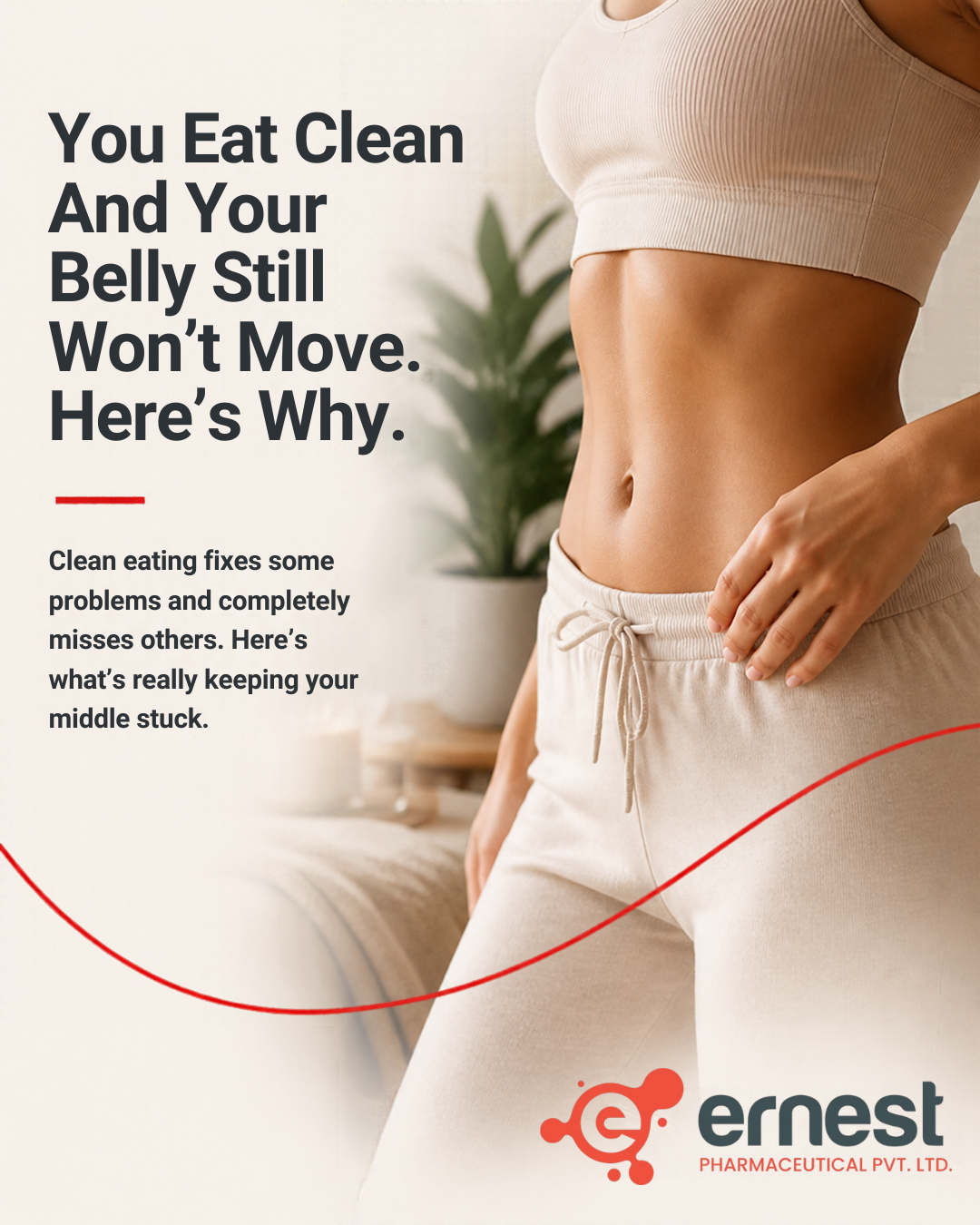
Eating Clean but Still Have Belly Fat? 9 Reasons Why
You swap refined carbs for wholegrains, cook at home and keep processed food to a minimum. Yet your middle looks much the same. This is a very common frustration, and stubborn belly fat is rarely down to food quality alone. Here are nine factors that "clean eating" does not cover.
First, work out which kind of belly you have
Not every belly is a fat problem.
- Bloating: smaller in the morning, bigger by evening, and linked to certain meals. This is usually gas or digestion, not fat.
- Stress-related: firm, tied to a stressful period, and often alongside poor sleep and cravings. It may involve visceral fat, the type stored around the organs.
- Lower "pooch": a rounded area below the navel, often after pregnancy. It can relate to the abdominal wall and posture.
- Soft, pinchable fat: changes slowly as overall body fat changes.
Many people have a mix, which is why one approach rarely fixes everything.
1. Healthy food is still energy-dense
Nuts, nut butter, olive oil, avocado, granola and fruit-heavy smoothies are nutritious, but they are calorie-rich. A handful becomes three, and a drizzle becomes a pour. You do not need to count everything. Just notice where portions have quietly grown.
2. Some "healthy" foods cause bloating
Large raw salads, cruciferous vegetables, beans, sparkling water, and sugar alcohols in "sugar-free" products (names ending in "-itol") can increase gas for some people. So can raising fibre too quickly. Try cooking some vegetables, adding fibre gradually, eating slowly and noting your personal triggers. If bloating is severe, painful or comes with changes in bowel habits, speak to your GP.
3. Sleep and stress affect where you store fat
Visceral fat is linked with chronic stress, short sleep, low activity and alcohol. In a 2022 Mayo Clinic study, healthy adults whose sleep was restricted for two weeks gained abdominal fat even though their weight changed little. Protecting your sleep matters as much as the contents of your plate.
4. Losing muscle can leave you "smaller but softer"
Plenty of cardio, too little protein and no strength training can reduce muscle along with fat. Including protein at meals and doing two or three short resistance sessions a week helps maintain muscle, which supports a firmer-looking waistline.
5. The pooch may not be fat
During pregnancy, the abdominal muscles can separate (diastasis recti). For some people a gap remains, causing a low bulge or "doming" when sitting up. Diet will not close it. A women's health or pelvic floor physiotherapist can assess it, and some ab exercises are not suitable until you have been checked. Posture, such as an arched lower back, can also push the belly forward.
6. Weekends can cancel out weekdays
Disciplined weekdays followed by two relaxed days can leave your weekly average unchanged. Keep a few anchors, such as a protein-rich breakfast, a walk each day and one planned treat meal rather than a free-for-all.
7. Liquid calories are easy to miss
Sweetened coffees, juices, smoothies, sugary kombucha and alcohol add up without making you feel full. Alcohol is also linked with poorer sleep.
8. Hormones change in midlife
During perimenopause, falling oestrogen can shift fat storage towards the abdomen. Strength training, adequate protein, sleep and stress management matter even more at this stage. If you notice changes in your cycle, mood, sleep or hot flushes, talk to your doctor.
9. You may be measuring progress the wrong way
Your belly changes through the day, through your cycle and after salty meals. Rather than checking the mirror daily, measure your waist at the navel, first thing in the morning, every two weeks. Also track how your clothes fit, plus your energy and sleep.
A simple plan to start with
- Identify your belly type.
- Watch portions of oils, nuts and smoothies.
- Increase fibre gradually and spot your bloating triggers.
- Prioritise 7–9 hours of sleep.
- Add daily walking and regular breaks.
- Strength train 2–3 times a week and include protein at meals.
- See a pelvic floor physiotherapist if you have had a baby and a stubborn pooch.
- Keep weekend anchors and review liquid calories.
- Track your waist, not just the scale.
You have not failed at clean eating. It simply addresses only one part of what shapes your midsection.
This article is for general information only and is not medical advice. Please consult a doctor or qualified healthcare professional about persistent symptoms, weight changes or hormonal concerns.