How UK Wholesalers Can Assess International Pharma Suppliers
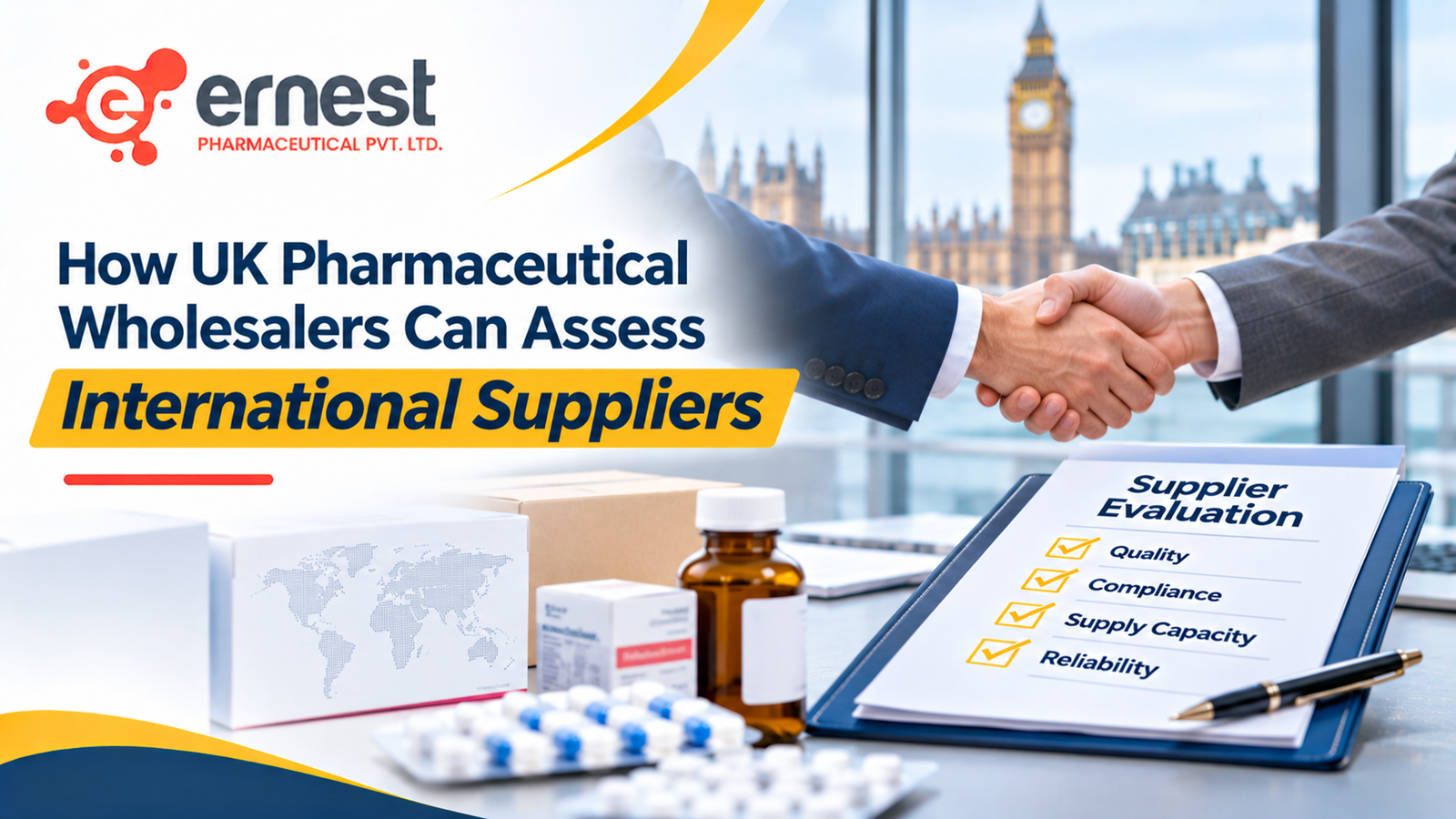
How UK Pharmaceutical Wholesalers Can Assess International Suppliers
Introduction
Working with international pharmaceutical suppliers can help UK wholesalers access a wider product range, develop reliable sourcing relationships and meet changing procurement requirements. However, purchasing medicines from overseas involves more than comparing prices and delivery timelines. Buyers must understand the supplier's legal status, manufacturing arrangements, quality systems, product documentation and ability to meet the requirements that apply to the UK market.
A supplier may operate legally in its own country but still require additional checks before its products can be imported or distributed in the UK. Similarly, a quality certificate or product catalogue does not, by itself, establish that a medicine is suitable for a particular UK supply route.
For wholesalers searching for international pharmaceutical suppliers UK, a structured evaluation process can reduce avoidable procurement and compliance risks. This guide explains how to assess overseas manufacturers, exporters and distributors, what documents to request, and which regulatory questions to resolve before placing an order.
Why International Supplier Assessment is Important
The purchase of pharmaceuticals concerns products for which quality, identification, storage conditions and traceability are vital. Where a supplier is in another nation, the buyer may have less direct sight of its facilities, regulatory environment, subcontractors and distribution arrangements.
A poor supplier assessment can lead to a number of potential difficulties, including insufficient documentation, confusing product status, inappropriate storage arrangements, unexpected delivery delays or difficulty in resolving a quality complaint.
A systematic supplier evaluation approach supports UK wholesalers:
- Ensure that the supplier is a bona fide, registered business.
- Know if the provider is a manufacturer, exporter, distributor or intermediary.
- Evaluate quality methods for manufacture, storage and handling of pharmaceuticals.
- Assess whether the product suggested is eligible for the anticipated UK supply channel.
- Identify missing documentation before the order ships.
- Define explicit duties for transit, complaints and recalls.
- Build supply connections on evidence, not on marketing promises.
Supplier evaluation shall be commensurate with the goods, the role of the supplier, the risks associated and the proposed transaction. A finished medication producer might need a different appraisal compared to a freight forwarder or a trading organization managing the transport.
1. Check the supplier’s business identity and legal status
The first step in due diligence for an offshore supplier is to check out who the customer is dealing with. Before you consider a commercial order, know the supplier’s legal identification and where it fits into the pharmaceutical supply chain.
Request and examine relevant business information such as:
- Company Name (Full Registered)
- Registered office address and address for trading.
- Company registration details if relevant.
- Business email domain and official website.
- Names and functions of commercial and quality contacts.
- Details about the places involved in the manufacture or distribution.
- Licences or authorizations provided by the local regulator relevant to
The name on the quotation, invoice, contract, product documentation and payment instructions must be the same or there must be a clear explanation of any difference. If supply is being arranged by a trading business from a distinct manufacturer, the relationship between the two organizations should be understood and documented.
Where available, cross-check the registration and licensing details with the official company register or medicines regulating authorities of the respective nation. Don’t just trust the certificates or screenshots the merchant provides.
Buyers must also establish whether the provider is authorized to execute the activity that they claim to perform. A corporation that exports pharmaceuticals does not necessarily make them and a manufacturer may not be the organization that does the wholesale distribution.
2. Review Quality System and Manufacturing Credentials.
Evaluation of quality systems is an important part of pharmaceutical suppliers qualification. Buyers need to know where the medicine is made, who is responsible for quality supervision, and what evidence exists to back the supplier’s assertions about manufacturing.
Relevant checks may be, depending on the product and supply arrangement:
- The legal name and the physical address of the production site.
- The relevant production authorization of the manufacturer.
- Current Good Manufacturing Practice (GMP) status, if applicable.
- The scope of any inspection or certifying proof.
- The manufacturer’s authorization is for the following product categories and activities:
- The name of any contract manufacturing or outsource production location.
- The supplier’s responsibility for quality assurance and quality control.
The issuing authority, site, scope, validity and relevance of a GMP certificate should be reviewed in relation to the product being purchased. A certificate in respect of one facility or activity should not be taken as proof for another.
Buyers should also inquire about the supplier’s procedures for dealing with quality deviations, out-of-specification results, change control, complaints and remedial and preventive actions. These procedures serve to indicate if there is a clear approach inside the organization for investigating and controlling quality problems.
It is crucial to discern between the supplier’s own quality-system records and independent regulatory evidence. Background information may be contained in a company brochure or self-declaration but should not be used as a substitute for verification by the proper regulator if such verification is available.
3. Please check the regulatory status of the product for the UK market
One of the most critical inspections that a pharmaceutical wholesaler in the UK will undertake is to confirm whether the proposed medicine can be legally imported and provided through the intended UK channel.
“Simply because a product is legally made or sold in its country of origin, it does not mean that it can be marketed or distributed in the UK. The product status must be considered separately from the supplier business credentials.
Ask before you buy:
- Whether the product is authorized for marketing in the UK where needed.
- The proposed product, strength, dosage form and presentation are in line with the applicable authorized information.
- Whether the activity is to import a licensed medicine or by another supply route.
- Whether a relevant wholesale distribution authorization is necessary.
- The need for a manufacturer's licence or other authorization for the import operation.
- If the product is under any special restriction or requires any extra license.
According to MHRA guidance on the importation of a human medication, “the importation of licensed human medicines may require one or more licenses depending on the circumstances. For example, a Wholesale Distribution Authorization (WDA(H)), a manufacturer's license and a marketing authorization may all be required.
The MHRA also describes the licensing criteria of the medicines’ manufacturer and wholesaler. Buyers should not presume that a foreign supplier’s licensing replaces UK authorizations needed for the UK-based importer or wholesaler.
Additional legal requirements may apply for products that do not follow the conventional licensed route, for example, some unlicensed pharmaceuticals. Suitable skilled regulatory or legal personnel should evaluate such arrangements prior to any order commitment.
4. Evaluate Supplier’s GDP and Distribution Controls
Quality of manufacture is just one facet of the pharmaceutical supply. Medicines also need to be stored, handled and delivered correctly after manufacture.
Good Distribution Practice (GDP) is a framework to ensure quality and integrity of products across the distribution chain. UK wholesalers should be aware of the manner in which the overseas supplier regulates storage and shipping, especially when the product has particular temperature, security or handling requirements.
Helpful questions include:
- Is there a storage condition for every product?
- Are temperature controlled locations monitored as required?
- Are monitoring devices maintained and records available?
- How are temperature excursions evaluated?
- Are items protected against damage, contamination and unauthorized access?
- How do you separate expired, damaged, returned or recalled products?
- Are transport providers evaluated and their roles documented?
- Does the supplier have shipping and handling records?
The MHRA’s Good Manufacturing Practice and Good Distribution Practice advice highlights the need to procure medicines from the approved supply chain and ensure appropriate storage, transit and handling conditions.
Where a supplier employs third-party warehouses, freight forwarders or logistics providers, the buyer should know which organization controls each stage. Responsibilities for temperature monitoring, shipment security and reporting delivery difficulties should be defined.
5. Request & Review Product Documentation
Documentation helps purchasers to identify what is being delivered and if the shipment meets the product specifications agreed upon. The required paperwork will differ according to the medicine, place of origin, import route and regulatory requirements that apply.
Buyers should check what documents are needed and who will deliver them before confirming an order.
Pertinent records may include:
- Product specification – specification of the important properties of the product and the accepted requirements.
- Certificate of Analysis (CoA): Report of the analytical results for a certain batch versus defined tests and acceptance criteria. Buyers are advised to verify the product name, batch number, test results, specification and issuing organization.
- Batch information: Identifies the batch/lot number and enables traceability.
- Manufacturing details: States where manufactured and essential details of production, if applicable.
- GMP evidence: Facilitates assessment of the pertinent quality credentials of the manufacturing site.
- Product authorization information: Assists in determining the regulatory status of the product in the relevant market.
- Safety and product information: May include approved product information or safety data based on the product and transaction.
- Shipping documents: These may contain the commercial invoice, packing list, transport paperwork and other records required for the shipment.
- Temperature records: Vital if the drug needs to be stored or transported under controlled circumstances.
A Certificate of Analysis does not adequately prove supplier reliability or regulatory compliance. It is one piece of evidence that buyers may need to look at. The document should be in agreement with the product and batch being given. Any odd results or discrepancies should be investigated.
Buyers may also examine the product categories and procurement needs while reviewing the pharmaceutical items under Ernest Pharmaceuticals’ product range.
6. Review Traceability, Complaints and Recall Procedures
A good supplier should be able to explain how they identify their goods and what they do if there is a quality or distribution problem.
Traceability is vital particularly where a complaint, alleged defect or recall refers to a specific batch. "To know what products are implicated and where they have been distributed, buyers need to be armed with relevant knowledge.
When you are evaluating suppliers, ask:
- Is the provider able to trace the batch or lot supplied against each order?
- Are manufacturing and expiration information available where applicable?
- Can the provider trace the product's origin?
- Are records kept of distribution?
- Do you have a procedure for receiving and investigating complaints on record?
- What do you do with suspected fake, faulty or broken products?
- Can the supplier handle a recall or urgent product notification?
- Who is the nominated quality contact for urgent issues?
The agreement between buyer and supplier should specify the speed at which relevant information is shared and which organization should communicate with other parties in the supply chain.
Buyers also need to be aware of the process of evaluating returned merchandise. Returned stock should not be automatically assumed to be fit for resale or redistribution. The person responsible should assess its condition, its storage history and the necessary procedures.
7. Assess the commercial viability and supply capability
A supplier may have the right quality credentials but if it cannot meet the buyer’s operational requirements, it is not a suitable commercial partner.
Hence, commercial evaluation should be performed in parallel, and not in lieu of, regulatory and quality checks.
You might like to see:
- Product availability: Find out if the product is usually available or on limited manufacturing schedules.
- Lead Times: Know the timetables for manufacturing, preparation, dispatch and transportation.
- Minimum order quantities Verify that the order volumes satisfy the wholesaler’s needs.
- Pricing structure: Specify currency, payment terms, taxes, freight charges and other costs.
- Shelf life: Agree acceptable residual shelf life at dispatch and reception if appropriate.
- Supply continuity. Ask how the supplier handles shortages, disruptions to production and variations in availability.
- Communication: Evaluate responsiveness of commercial and quality interactions.
- conditions of contract: specifications, duties of delivery, documentation, procedures for non-conformance, and dispute resolution.
“You should be asking questions when prices are unusually low, not buying right away.” Buyers have to be aware whether the pricing is based on product specifications, order quantities, shelf life, delivery arrangements and the real role of the provider in the transaction.
A comprehensive supply agreement can help to minimize misunderstandings by recording the goods, specifications, responsibilities, delivery circumstances and methods for dealing with problems.
8. Perform a Risk-Based Supplier Evaluation
“Not every supplier has the same level of review. The extent of assessment should be commensurate with the possible consequences of a supplier failure and the complexity of the supply agreement.
For example, a supplier that provides an essential drug may require a more extensive examination than a supplier that provides a low-risk non-product service. A new provider with little operating history may likewise be worthy of deeper scrutiny than an established supplier with a proven history of performance.
A risk-based assessment may look at:
- Product risk: The nature of the product, its storage needs and the repercussions of a quality failure.
- Regulatory risk. Complexity of the import route and relevant authorizations.
- Supplier risk: Supplier experience, licensing, quality history, and transparency.
- Geographical risk: The regulatory environment and the real supply-chain conditions of the country in which it operates.
- Logistics risk: Transit duration, temperature, handling points and security.
- Documentation risk: Records missing, inconsistent or difficult to verify.
The assessment should result in a written decision: to approve the supplier, request further proof, restrict the proposed activity or reject the provider. If approval is conditional, the outstanding requirements should be noted and resolved before the relevant purchasing or distribution action is allowed to proceed.
9. Common Mistakes in Selecting International Pharmaceutical Suppliers
Even seasoned procurement teams sometimes miss key facts when working with new international vendors. Typical mistakes are:
- Relying on certifications without verification: Check documents for authenticity, scope, relevance and current status.
- Assuming that a country of origin approval means UK product status. Approval in another nation does not immediately give license to market or supply a product in the UK.
- Accepting partial batch information: Missing or inconsistent batch information might lead to traceability issues.
- Real manufacturer does not matter: Buyers should find out the site of manufacture rather than the middle-man exporter.
- Using a CoA in place of quality assessment: Batch analytical data cannot replace supplier, production, product-status and distribution evaluations.
- Don’t forget transport obligations. Buyers need to know who is responsible for storage and handling at each point along the way.
- Select on price alone: Quality, regulatory and supply-continuity factors should be weighed alongside commercial terms.
Avoiding these mistakes makes supplier selection more predictable and enables buyers to recognize concerns before they become costly procurement difficulties.
10. UK Pharmaceutical Wholesalers Practical Checklist
Below is a checklist that procurement and quality teams can use to vet a foreign supplier before approval:
- Check the supplier’s legal name, registered address and business identification.
- Identify the true manufacturer and all appropriate supply chain middlemen
- Check the appropriate manufacturing and distribution licences.
- Review evidence for GMP. Confirm scope and relevance.
- Confirm the UK regulatory status and supply route for the product.
- Check what UK import and wholesale authorizations you need.
- Check the product specifications and batch documentation.
- Where appropriate check storage, transit and temperature control facilities.
- Know the supplier’s traceability, complaint and recall procedures.
- Please check commercial terms, lead time, shelf life and continuity of supply.
- Record the assessment, any outstanding actions and the approval decision.
- Plan for periodic evaluation based on supplier and product risk.
This checklist is a good starting place. It is not a substitute for a formal audit, regulatory assessment or legal review when such are required.
Conclusion:
Choosing an overseas pharmaceutical supplier involves a disciplined strategy that includes business validation, quality-system review, product-status inspections, documentation assessment and commercial evaluation.
If you are a wholesaler seeking international pharmaceutical suppliers UK, the best way to check is to look at the actual supplier and manufacturing arrangements, not just advertising claims or a single certificate. Effective UK pharmaceutical wholesaler supplier checks should identify who is accountable for the product, how it is manufactured and distributed, and if the intended supply channel complies with applicable UK standards.
Having a structured methodology for offshore supplier due diligence also helps procurement teams spot weaknesses before completing orders. By include pharma supplier certification in the standard purchasing process, UK wholesalers can foster better supplier relationships and ensure more dependable pharmaceutical sourcing.
Ernest Pharmaceuticals Pharmaceutical Product Information and Industry Resources for Business Buyers. To discover more about the company, visit the Ernest Pharmaceuticals About Us site and check out its published pharmaceutical papers and industry tips.
Possible questions you may have
1. How do UK pharmaceutical wholesalers evaluate international suppliers?
UK wholesalers can check overseas suppliers by verifying the business identity, relevant manufacturing and distribution authorizations, quality systems, product status for the UK market and batch documentation, storage, transportation and traceability procedures.
2. What documentation should a distributor ask for from a foreign pharmaceutical supplier?
Buyers may ask for business registration details, manufacturing authorizations, evidence of GMP, product specifications, batch-specific Certificates of Analysis, product authorization information, batch details and necessary shipping or temperature records, depending on the product and transaction.
3. Is a foreign GMP certificate enough for a pharmaceutical to be acceptable in the UK?
No. A GMP certificate provides evidence of the quality status and scope of a production site. It does not, in itself, demonstrate that a particular medicine has the necessary UK product status or that the intended import and supply route is in accordance with UK licensing regulations.
4. What is due diligence of an overseas supplier in pharmaceutical procurement?
Due diligence of overseas suppliers is the process of verifying the identification, legal status, manufacturing arrangements, quality systems, documentation and supply-chain controls of an international supplier before starting or continuing a commercial partnership.
5. Why is a Certificate of Analysis vital when buying drugs abroad?
A Certificate of Analysis is analytical information by batch against defined tests and specifications. It helps purchasers assess the supplied batch but should be used in conjunction with other quality, regulatory and supplier checks.”
6. What UK licenses are needed to import medicines?
Requirements can include a Wholesale Distribution Authorization, a manufacturer's licence and a marketing authorization, depending on the goods and the import method. Buyers should consult current MHRA guidance and take necessary regulatory advice for the activity.
7. How often should pharmaceutical suppliers be re-evaluated?
The frequency of reassessment should be determined according to the risk profile of the supplier and product, relevant procedures and any applicable regulatory requirements. An earlier assessment may be warranted for a major change in the manufacturing site, authorization, quality performance, ownership or supplier arrangement.
8. What to do if the foreign supplier sends incomplete paperwork to the wholesaler?
Buyers should check for any missing or conflicting information, ask for explanation and confirm the necessary details before proceeding. If crucial product, quality or regulatory requirements cannot be established, the supplier or proposed transaction should not be approved until the issue is remedied.