Importing Medicines into Great Britain: B2B Guide
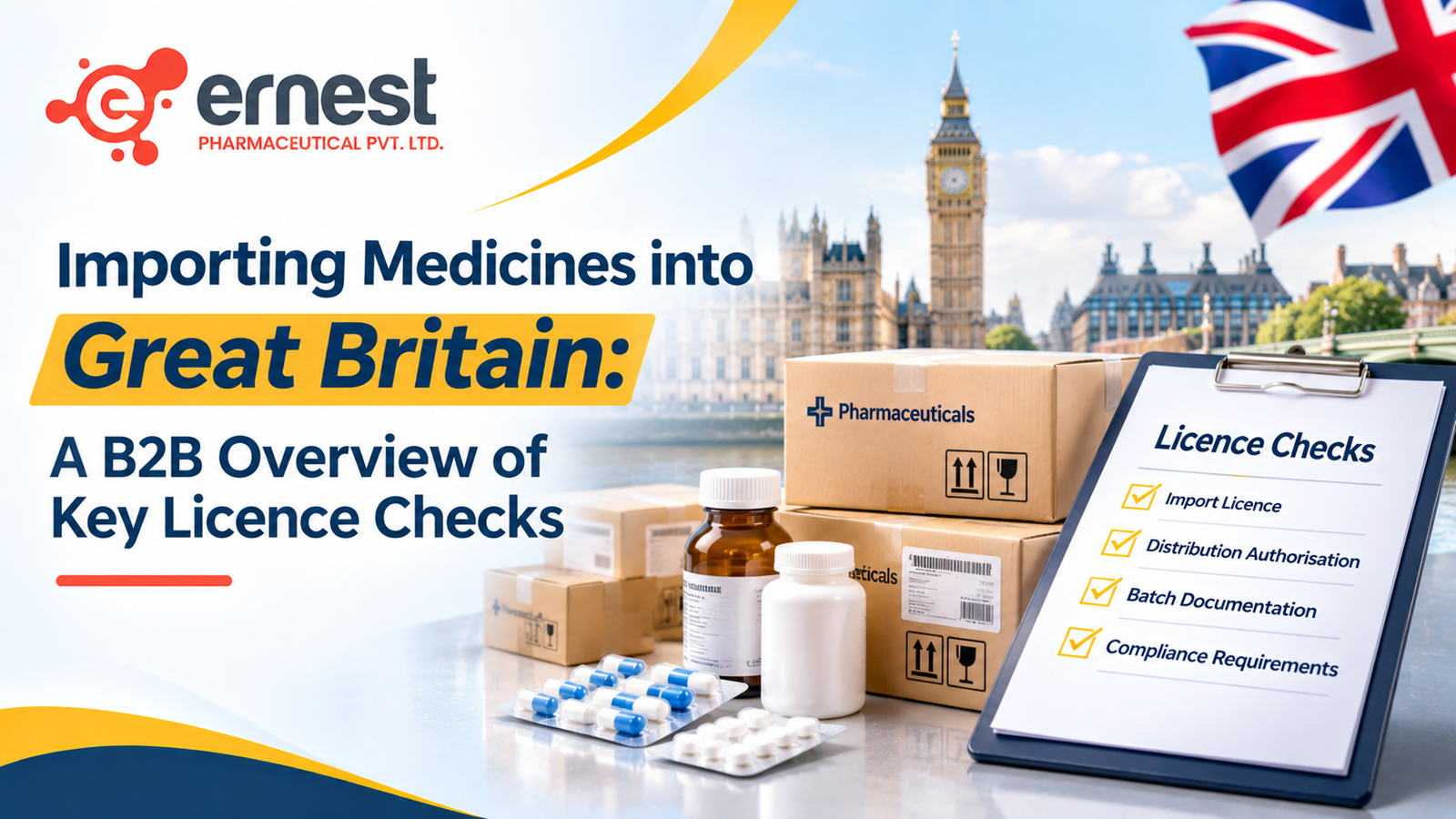
Importing Medicines into Great Britain: A B2B Overview of Key Licence Checks
Importation of medications into Great Britain is a controlled activity subject to a number of checks that vary depending on the product, the country of origin, the marketing authorization status and the operations carried out by the importing business. Pharmaceutical wholesalers, distributors and overseas suppliers can assist avoid regulatory delays and supply chain issues by knowing what is required before shipping.
England, Scotland and Wales are together called Great Britain. Northern Ireland has alternative rules in some aspects of medicines regulation, therefore businesses should not assume that requirements in Great Britain apply to Northern Ireland transactions.
The medications and Healthcare products Regulatory Agency (MHRA) is the licensing and regulatory framework for human medications. Its guidance differentiates between wholesale distribution, manufacturing and importing activities. A firm should therefore decide what role it is going to play before deciding what authorization is required.
A corporation purchasing medications from a foreign supplier does not automatically hold a licence to import or distribute those items in Great Britain. The licence must be appropriate to the activity, product category and supply route concerned. This starts with the MHRA official guidance on importing a human medicine.
1. Know What Licence Applies To Your Import Activity
One of the first tests on importing medications into Great Britain is to determine whether the business needs a Wholesale Distribution Authorization, a Manufacturer’s/Importer’s Licence, a marketing authorization or a combination of these.
The prerequisites are not mutually convertible. A manufacturer's/importer's licence relates to particular manufacturing and importing activities. A wholesale distribution authorization usually covers wholesale supply.
Wholesale Distribution Authorization (WDA(H))
A Wholesale Distribution Authorization (often known as WDA(H)) is needed by companies who sell or deliver human pharmaceuticals to somebody other than the person who will utilize the medicine. This may include wholesalers, distributors and companies participating in the wholesale supply chain.
A WDA(H) is particularly applicable where a business imports medications by a method permitted by its wholesale authorization and supplies them to other authorized clients.
Businesses should verify before relying on a supplier or logistics partner’s WDA(H):
- If the authorization is current and valid.
- Whether the authorization is held by the correct legal body.
- Coverage of important properties and operational sites.
- Whether the licence covers the import and wholesale distribution activities that are needed.
- Whether the required import route and product categories are included.
- The arrangements for the Responsible Person as needed.
WDA(H) should not be seen as a general permission to import all medicines from all countries. The scope and the relevant import route have to be verified according to the goods and the originating nation.
The MHRA said wholesale distributors must adhere to Good Distribution Practice (GDP) and be inspected against it. Businesses should consult the official manufacturer and wholesaler licensing guidance before determining whether they require a licence.
Licence de fabricant/importateur
A MIA, Manufacturer’s/Importer’s Licence, is relevant for companies involved in manufacturing, assembly or specific import activities.
For instance, the importation of a finished licensed pharmaceutical from a nation other than the recognized country for import route may require a manufacturer's licence authorizing importation. The licence holder must also comply with the relevant Good Manufacturing Practice (GMP) regulations.
Businesses should ask themselves whether their actions involve:
- Importation of pharmaceuticals from a nation not included in the approved country list for import.
- Manufacture or assembly of pharmaceutical items.
- Repackaging or other operations covered by manufacture authorization requirements.
- Importing products requiring certification or release under the applicable manufacturing and import arrangements.
The right licensing will depend on the goods and the precise transaction. Importers should not presume that a WDA(H) will suffice for all international supply arrangements.
Marketing Authorization
Another significant aspect of the compliance examination is the marketing authorization of a drug. A marketing authorization is a confirmation that a pharmaceutical product has been authorized to be sold or supplied in the relevant market in accordance with its approved conditions.
Before importing a drug for the Great Britain market buyers should establish:
- Whether the product has the correct UK or Great Britain marketing authorization.
- Whether the authorization is for the sourcing of a certain product.
- Whether the product name, strength, dose form and pack presentation conform to the relevant authorization.
- If the suggested supply line is allowed.
- Are there any specific or parallel import arrangements in place
The product being registered in the nation of origin of the supplier does not automatically mean that the medicine can be marketed in Great Britain. Separate checks are to be made on product authorization and on import authorizations.
2. Verify Country of Origin and Import Route
The country of origin of a drug can affect the licence and quality assurance requirements. Great Britain has an approved country framework for the import of certain medications. The rules that apply depend on whether the product is being imported from a listed country or not.
Imports from a Recognized Country
A Great Britain wholesale dealer may, under the applicable method, import certain medicines from countries on the approved nation for import list, providing the WDA(H) is met and additional conditions are fulfilled .
For qualified products, the framework accepts Qualified Person (QP) certification from listed countries, provided the relevant verification processes are performed. The importer must show that the product and lot qualify for this routing, not just based on the supplier’s location.
Before proceeding, firms should consider:
- Verify that the nation of origin is on the current approved countries for import list.
- Make sure that the medicine is within the relevant import route.
- Check that the WDA(H) covers the necessary import activity.
- Check for the availability of the required QP certification proof.
- Identify the requirement for a Responsible Person for Import (RPi).
- Maintain the supporting records of the appropriate batch and transaction.
In this assessment the list of approved countries of the official body should be checked. The list and associated rules should be re-checked before each relevant import program as regulatory requirements can change.
Imports from non-licensed countries
A different authorization route may be required for importing medicines from countries not on the recognized nation for import route. Some licensed drugs require a Manufacturer’s/Importer’s Licence authorizing importation.
GMP responsibilities, batch certification and release before the goods may be placed on the market. The importer may have
Businesses should not, therefore, consider all overseas exports the same. A drug that comes from an approved nation may be regulated differently than an identical drug that comes from a country not on the list.
Review the appropriate MHRA instructions and licensing terms before finalizing the purchase order, shipment arrangements or customs documentation.
3. Understand the Role of Responsible Person for Import (RPi)
The Responsible Person for Import (RPi) plays a key role in several import procedures for pharmaceuticals coming into Great Britain from recognized nations.
The RPi is responsible for verifying that the relevant QP certification checks have been completed. The required independent batch release certification for applicable biological goods are also to be validated.
It is not only an administrative position. “The importing organization should have an effective process to review evidence and confirm that the required certification has taken place.
What Should the RPi check?
Depending on the goods and the import route, the checks may include:
- Proof that the batch in question has been QP approved.
- Confirmation that the certification covers the right product and batch.
- Batch certification records or other suitable evidence; and
- Independent batch certification for release of relevant biological products.
- Records proving the needed verification has been accomplished.
The RPi may delegate the activity of checking certification evidence but is responsible for ensuring that the checks are effective.
Businesses should also differentiate between the RPi and the Responsible Person (RP). The roles are not interchangeable, and what is the best role depends on the product and supply structure.
The MHRA guidance on acting as a Responsible Person Import sets out the applicable obligations and evidence requirements.
4. Check Medicine’s Market Status and Regulatory Approval
Before approving an international medicine buy, the importing corporation should know the exact authorization and intention of supply of the product.
A product can be:
- A drug which has a marketing authorization in the UK or Great Britain.
- A drug authorized in an approved country but not authorized for the intended Great Britain supply route.
- A medicine not licensed but provided under an approved special clinical need arrangement.
- a product which is for parallel import under the appropriate licence.
- Medicines imported for export and not for supply to the market of Great Britain.
These groups may have separate license, notification and responsible person requirements. A customer should not assume that because a product is authorized in another country it may be routinely sold in Great Britain.
Other conditions may apply to unlicensed drugs. The importer should check the appropriate licence category, establish the legal basis for the proposed supply and complete any applicable MHRA notice. Special medicinal products are subject to special regulations. They are not to be classified as typical wholesale imports.
Parallel imports also have their own authorization procedures. Businesses in this category should examine the relevant Great Britain Parallel Import Licence and current requirements on packaging and labeling.
5. Check suppliers, products and batch documentation
Pharmaceutical import compliance goes beyond checking licences. Buyers should also check documentation that confirm the identity, quality and traceability of products and the integrity of the supplier chain.
A real B2B document evaluation might include:
- Supplier authorization details: Check the legal identification of the supplier and any relevant manufacturing or wholesale licences or approvals.
- Product information: Review the product name, strength, dosage form, pack size and relevant marketing authorization documents.
- Batch documentation: Check batch numbers, manufacturer details and expiry dates.
- Certificate of Analysis (CoA): Check the test results for the specific batch and make sure the document is for the product received.
- Evidence of QP certification: Gather and review the needed supporting documentation for the import route.
- GMP & GDP information: Check appropriate compliance evidence for manufacturers, storage facilities and distribution partners.
- Transportation and storage records: Verify that the proposed transportation and storage arrangements are appropriate for the product.
- Commercial and customs documentation: Make sure that your invoices, packing lists and other shipping documents match the product and transaction.
A Certificate of Analysis is beneficial in assessing quality information on a batch particular basis, but does not provide a substitute to a marketing authorization, import license or necessary QP certification. Nor does a certificate of quality from the supplier guaranty that the importing business is legally permitted to do business.
6. Verify Good Distribution Practice and Storage Arrangements
Medicines should be stored and transferred under settings that ensure their quality and integrity. Good Distribution Practice is consequently a key issue for pharmaceutical wholesalers and distributors.
When choosing a partner, importers should consider if the proposed logistics or storage arrangements are adequate for the products to be handled.
Key checks are:
- That the premises for storage are covered by the required authorization.
- Availability of proper storage facilities for temperature controlled items .
- If temperature monitoring and excursion procedures are written.
- the possibility to track products along the distribution chain.
- Returned/damaged or suspected fake products are dealt with under relevant processes.
- If the transport providers are aware of the storage and handling requirements of the product.
- If deviations, complaints and product recalls can be processed efficiently.
For temperature-sensitive pharmaceuticals, companies should consider the whole transportation route, including international transit, customs management, temporary storage and final delivery. The appropriate shipping arrangement should be made prior to shipment rather than subsequent to a temperature excursion or a delivery problem.
GDP compliance is not simply the warehouse’s responsibility. All organizations in the wholesale distribution chain should understand their duties and maintain adequate records.
7. Pre-Import Compliance Check List
A methodical assessment before to ordering can assist pharmaceutical companies in identifying missing information early. Here is a checklist for preliminary B2B due diligence.
- Importer: Verify the legal name of the business importing the goods.
- Scope of the licence: Ensure the relevant WDA(H) or Manufacturer’s/Importer’s Licence is present and encompasses the proposed activity.
- Product authorisation: Is the medicine authorized for commercialization and in which market?
- Country of origin: Verify if the country of origin appears on the relevant approved country for import list.
- Responsible person: Check that an RP or RPi is needed and that the appropriate provisions are in place.
- Batch certification: Get the appropriate batch release evidence or QP certification as required.
- Product documentation: Review CoA, batch details, expiry information and relevant product records.
- Distribution arrangements: Storage and transit should comply with applicable GDP and product-specific criteria.
- Customs and shipping: Ensure that the commercial and shipping papers accurately represent the items and transaction.
- Record keeping: Decide how licence checks, batch records, certification proof and distribution records will be recorded.
This checklist is intended as a starting point for business due diligence and is not a replacement for a product-specific regulatory examination.
8. Common Mistakes Businesses Make to Avoid
Businesses may make assumptions regarding licences, products or suppliers without examining the complete transaction, leading to import compliance difficulties.
Common errors include:
- Relying on the supplier’s export permit to import pharmaceuticals into Great Britain.
- To consider WDA(H) as a license to import all types of medicines.
- Failure to differentiate between imports from other nations and an allowed national import route.
- missing the role of RPi where it is needed.
- To recognize a Certificate of Analysis as a substitute for QP certification or marketing authorization.
- Not checking that the actual product and batch correspond to the supporting materials.
- Failing to assess applicable GDP arrangements when using storage or transport providers.
- Using Great Britain rules for Northern Ireland without checking the distinct arrangements.
- Confirming the regulatory pathway before arranging for shipping.
A better strategy is to undertake the licensing, product, supplier and paperwork evaluation before the commercial transaction goes into dispatch.
9. Supporting UK buyers by international suppliers
UK importers can be helped by international pharmaceutical suppliers if they provide product and quality information at an early stage of the procurement process. Good communication is helpful for buyers to do their own regulatory and commercial due diligence.
Suppliers should be ready to discuss:
- Specifications and presentations of the product accessible.
- Documentation of production and quality.
- Certificates of Analysis and batch-specific records.
- Information related to GMP.
- Labeling and packaging, storage conditions.
- Availability and lead times of products.
- The facilities and legal entities in the supply chain.
Overseas enterprises considering the UK market should be aware that delivering a drug to a UK buyer does not relieve the buyer of the obligation to get the necessary authorizations. The parties should also confirm which organization is responsible for imports, certification, storage and wholesale distribution before entering into a supply agreement.
Ernest Pharmaceuticals lists its pharmacological portfolio on its product range International buyers can also visit its About Us page to discover more about the company. More business information for companies can be found at the Ernest Pharmaceuticals website including its pharmaceutical insights and healthcare blog and articles and pharmaceutical resources. Any proposed supply arrangement should still be evaluated against the specific UK regulatory requirements relevant to the goods and transaction.
10. Conclusion
To import pharmaceuticals into Great Britain, a structured evaluation of the importing firm, product authorization, place of origin, relevant MHRA licensing and batch documentation is required. A WDA(H) may be suitable for wholesale distribution and some import channels; other transactions may require a Manufacturer's/Importer’s Licence or other authorizations.
The most crucial step is to identify the correct regulatory channel before you buy or ship drugs. Importers should check the licence scope and whether an RPi or RP is necessary, check QP certification if pertinent and ensure storage and distribution arrangements comply with relevant standards.
Careful preparation for pharmaceutical distributors, wholesalers and overseas suppliers helps to ensure a more transparent and reliable supply chain. Businesses should always check the current MHRA guidance and seek professional regulatory advice when the rules for a particular product or transaction are unclear.
Common Questions
1. What licence is needed to import pharmaceuticals into Great Britain?
The permit you need depends on the goods, source country and import activity. A WDA(H) may have specific wholesale importation routes. A Manufacturer's/Importer’s Licence is necessary for certain manufacturing and importation operations. A marketing authorization may be necessary for a drug to be sold.
2. What is a UK medicine import licence?
The term UK medicine import licence is frequently used generically to indicate the authorization for a certain medicine import operation. It may refer to WDA(H) , Manufacturer’s/Importer’s Licence or other suitable authorization. The right requirement will depend on the product and import route.
3. What is WDA(H)?
WDA(H) means Wholesale Dealer's Authorization for human medications. It authorizes some actions of wholesale distribution subject to its requirements. Businesses distributing drugs to organizations or individuals other than the patient will normally need to hold the proper wholesale authorization.
4. Can I take all medicines into Great Britain with a WDA(H)?
Nope. A WDA(H) does not automatically include all import routes. For example, imports from the nations outside the permitted country for import framework may require a Manufacturer’s/Importer’s Licence. The actual extent of the license and the product circumstances must be verified.
5. What role does an RPi play in the import of pharmaceuticals?
The Responsible Person for Import ensures that the necessary QP certification inspections have been carried out for relevant imports into Great Britain. The RPi additionally guaranties availability of relevant independent batch release certification for some biological goods.
6. Do medicines imported into Great Britain require a marketing authorization?
Medicines must have the right marketing authorization before they may be sold broadly in Great Britain. However, there are particular legal procedures for certain unlicensed drugs and other exceptional conditions. Businesses should check the right way before making supply arrangements.
7. A pharmaceutical importer shall review the following documents:
Depending on the product and the route of import, the importer may need to look at supplier authorizations, product authorization data, batch records, Certificates of Analysis, evidence of QP certification, GMP or GDP information, shipping documentation and storage records.
8. Do Great Britain and Northern Ireland have the same laws for importing medicines?
Not in all respects. Arrangements in Great Britain and Northern Ireland are varied for several drug import and distribution activities. If you are a business supplying to both markets you should verify the relevant MHRA recommendations and requirements for each territory.