Pharmaceutical Batch Traceability: Questions for US Importers
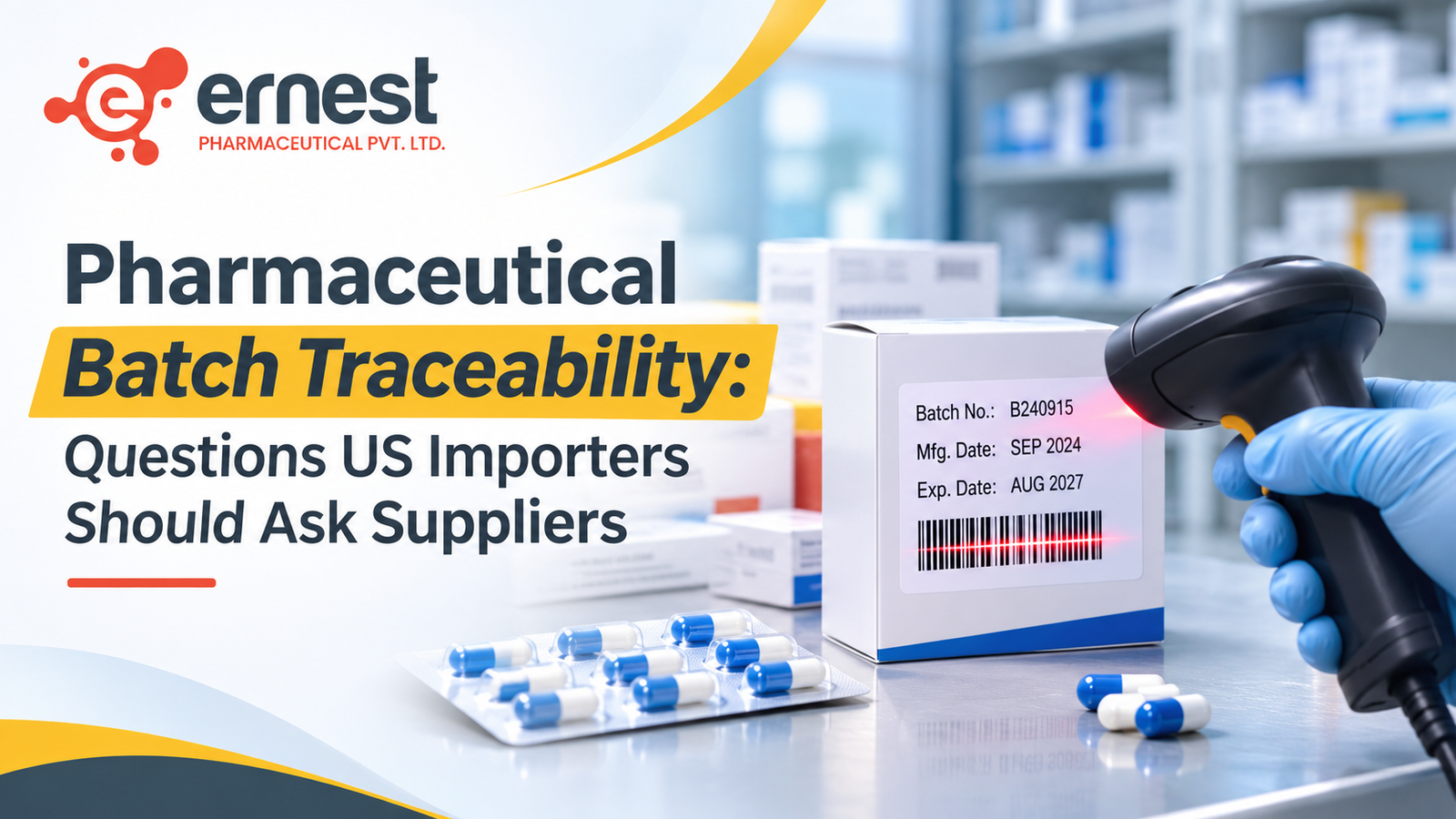
Pharmaceutical Batch Traceability: Questions US Importers Should Ask Suppliers
Introduction
The first step in bringing pharmaceutical products into the United States is to verify the supplier and review product specifications. Importers also need to know where a medicine was manufactured, what batch it is part of, how it was tested and whether its supporting documentation can be verified. That is where pharmaceutical batch traceability comes in.
A unique identification reference is assigned to each lot of pharmaceutical product, which traces the medicine back to its manufacturing, quality testing, packaging, storage and distribution records. This information helps pharmaceutical importers determine if the documentation supplied by a vendor actually relates to the products being bought.
Medicine batch traceability is particularly critical for US pharmaceutical importers because of the need for product verification and distribution as stipulated by the pertinent regulations such as the Drug Supply Chain Security Act (DSCSA).
But just getting a batch number or a Certificate of Analysis (COA) does not make it fully traceable. Buyers should be aware of how these records are generated, maintained, linked and verified.
This guide covers the key questions US importers should ask pharma suppliers to assess batch traceability, check supply chain records and detect possible documentation gaps before shipment.
Pharmaceutical Batch Traceability: What It Is
Pharmaceutical batch traceability is the ability to identify and track a specific batch of medicine throughout the relevant stages of its supply chain.
A pharmaceutical batch or lot is a defined quantity of product manufactured under specified conditions and identified by a batch or lot number.
This number links the product to critical manufacturing and quality records such as:
- Manufacturing records: Information about the process of manufacturing, where the product was manufactured and the relevant dates of production.
- Quality control records: laboratory test results, approved specifications and quality evaluations.
- Certificate of Analysis: Details of testing and quality approval specific to the batch.
- Packaging records: Data linking the manufactured batch to its packaging and labeling.
- Storage records: Information on the conditions of the warehouse and handling of the product.
- Distribution records: Data on product movement between suppliers, distributors, and other supply chain participants.
- Expiry information. Manufacturing dates, expiry dates and applicable retest dates.
For pharmaceutical importers, these records help establish a documented link between the medicines received and the information provided by the manufacturer or supplier.
A strong traceability process also helps investigations when there is a product discrepancy, quality concern or potential recall.
What’s in Pharmaceutical Batch Traceability for US Importers?
Pharmaceutical importers have relationships with a number of organizations, including manufacturers, exporters, distributors, logistics providers, customs brokers and receiving businesses.
The more participants, the greater the need for accurate documentation and clear responsibility.
Without reliable pharmaceutical batch traceability, importers may find it difficult to verify the identity of products, investigate discrepancies and identify affected inventory.
Below are the main reasons why batch traceability is important.
1. Check Product Authenticity
Batch identification is a means of linking physical pharmaceutical products to their respective manufacturing and quality documentation.
Importers must verify that the batch number printed on the packaging corresponds to the batch number listed on the relevant Certificate of Analysis and other supporting documents.
That in itself doesn’t prove authenticity, but it’s a crucial step in verifying something.
2. Providing Quality Assurance
Each batch of manufacture may have its own testing & release records.
Documentation on a batch-specific basis enables the procurement and quality teams to review whether the medicine supplied has been tested against the relevant specifications.
This is especially true if you are getting medicines from manufacturers outside of your country.
3. Enhancing Recall Readiness
The traceability records are used to identify the products involved and where they have been distributed if a quality or safety problem is identified with a specific batch.
These records can be used by importers to investigate:
- What batch it is.
- Inventory quantity received.
- Where the stock is warehoused.
- Did customers or distributors receive the products.
- Whether other shipments have the same batch.
The accuracy of these records can affect the efficiency with which an organization responds to a product concern.
4. U.S. Supply Chain Compliance Support
The US Drug Supply Chain Security Act calls for the identification and tracking of certain human prescription drugs in the pharmaceutical distribution supply chain.
The FDA provides a description of an electronic interoperable system to track and trace applicable prescription drug products at the package level.
Rather than assuming that all imported pharmaceutical products are subject to the same requirements, importers should know which DSCSA obligations apply to their specific products, transactions and role in the supply chain.
For official information, read the FDA’s Drug Supply Chain Security Act (DSCSA) .
5. Keeping Accurate Records in Supply Chain
Accurate records help to connect purchasing information to product identity, batch details, quality documents and shipment information.
This helps procurement and compliance teams in investigating inconsistencies and keeping supplier records organized.
12 Questions US Importers Must Ask Pharmaceutical Suppliers About Batch Traceability
US importers need to make sure their suppliers can provide reliable and verifiable batch information before they confirm a pharmaceutical purchase.
The following questions may help in evaluating a supplier’s documentation practices and traceability capabilities.
1. Can You Give the Exact Batch or Lot Number Prior to Shipment?
That should be one of the first questions when you buy pharmaceuticals.
Once the right stock is selected, the supplier should be able to identify which batch to send.
Importers should ask for:
- Generic name, product name.
- Dosage form and dose strength.
- Manufacturer’s Name.
- Batch/lot number.
- Date of manufacture, if applicable.
- Expiration date
- Stock quantity available.
- Packaging configuration .
Verify that the batch number on the product matches that on the product information and supporting documentation.
If the supplier only gives a sample batch number or information from previously available inventory, buyers should make it clear if those details are the actual stock being purchased.
2. Do You Provide a Certificate of Analysis for a Specific Lot?
One of the most important documents to review for pharmaceutical batch quality is a Certificate of Analysis.
This is a record of analytical test information for a specific lot.
U.S. importers should ask if the supplier can provide the COA for the specific lot that will be shipped.
Please verify the following information:
- Identification of product and manufacturer.
- Batch or lot number
- Testing specifications apply.
- Analytical methods
- Acceptance criteria .
- Laboratory results obtained.
- Quality control sign-off
- Date of issue of document.
Importers should also verify whether the certificate was issued by the manufacturer or an authorized testing laboratory.
A COA from another batch should not be taken as evidence of testing for the batch being supplied.
For a more detailed review, see our Guide to Certificate of Analysis in Pharmaceutical Procurement.
3. Who Makes the Original Medicine?
When purchasing through exporters, distributors or trading companies the importer should try to find out the original manufacturing organization.
The origin of the medicine is not determined by the details of the supplier’s company alone.
Ask the supplier:
- Who produces the product?
- What is the name and location of the manufacturing plant?
- Is the supplier directly linked to the manufacturer?
- Is it possible to identify the manufacturer on your own?
- Do we have the applicable manufacturing and quality documents?
This information allows buyers to know the actual source of the medicine and the organizations in the supply chain.
If there is more than one company involved in the transaction, the responsibilities of each should be well documented.
4. How Do You Confirm Batch Number Matches Physical Product?
This question helps to determine whether the supplier has a defined verification process or just collects documents.
Check the batch number in the relevant records.
Importers should contact the supplier if:
- Batch number printed on the medicine packaging.
- The batch number as shown on the COA.
- Batch release and manufacturing records.
- Packaging records are available.
- Packing list and shipment documents (if any).
Any discrepancies should be investigated before using the affected documentation.
For example, if the physical medicine packaging states that it is Batch A123 and the COA states that it is Batch A124, the supplier should explain the discrepancy and provide the correct supporting documentation.
A mismatch is not an automatic sign of a counterfeit or defective medicine but needs to be resolved by appropriate verification procedures.
5. Are Records of Manufacturing and Batch Release Available?
A Certificate of Analysis provides the analytical results, but it may not contain the complete manufacturing history of a batch.
Other manufacturing and release documentation may be applicable depending on the product, supplier relationship and quality procedures that apply.
Ask the supplier if they can supply or facilitate access to:
- Batch Production Records.
- Batch packaging log.
- information batch processing
- Quality control test record.
- Documentation for batch release.
- Where applicable, relevant deviation or investigation records.
These records give importers visibility into how a particular batch was manufactured, tested, reviewed, and released.
Access to detailed manufacturing records may be subject to confidentiality arrangements and applicable regulatory requirements. Importers should establish the appropriate document sharing process prior to placing an order.
6. How Do You Track Medicines Across the Various Participants in the Supply Chain?
Pharmaceutical products can pass through a number of organizations before arriving at their final destination.
The supply chain for international transactions may include:
- Original maker.
- Exporter or authorized supplier.
- Freight forwarder
- Customs agent.
- Importeur.
- Warehouse / logistics provider
- Authorized Dealers.
When products move between these participants, importers should inquire how batch information is retained.
There are some important questions:
- Can you tell the original manufacturer?
- Are batch and shipment references related?
- Can the supplier identify the immediate consignee?
- Are changes in product ownership recorded where applicable?
- Can the distribution records be retrieved as needed?
For applicable prescription drug transactions, the DSCSA requires the relevant trading partners to exchange and maintain certain product tracing information.
The particular requirements depend on the function of the trading partner and the product and transaction in question.
7. How Do You Confirm Product Expiry Dates And Remaining Shelf Life?
Batch verification should also include manufacturing and expiry details.
Two batches of the same medicine can have different manufacturing dates and different remaining shelf life.
US importers should be asking suppliers:
- What is the manufacture date for the batch available?
- What is the ending date?
- What will be the remaining shelf life at the expected delivery date?
- If applicable, does the product have a specific retest date?
- Are the dates on the packaging and supporting records verifiable?
This is especially the case when buying pharmaceuticals in bulk.
Importers must establish minimum remaining shelf life requirements prior to confirming an order.
A batch may have the correct documentation, but may not be able to meet the commercial or distribution requirements of the buyer because of insufficient remaining shelf life.
8. What Are the Quality Checks Done Before Dispatch?
A supplier should be able to describe the quality verification activities performed prior to a shipment leaving the facility.
Ask about the controls to ensure the stock selected corresponds to the authorized order and accompanying documentation.
These include, but are not limited to:
- Verify product name and strength.
- Verification of Batch Number.
- Check the expiry date.
- Check packaging and labeling.
- Quantity check.
- COA review.
- Quality Release Status Confirmation
- Checks of consistency of documentation.
The specific checks will differ according to the medicine, the manufacturing process and the quality procedures in place.
Importers should also ask who is responsible for approving the stock before it is despatched.
9. How Are the Storage and Transport Conditions Recorded?
Batch traceability is not just a matter of manufacturing and laboratory records.
The handling history of pharmaceuticals may also be important in understanding the storage and transportation conditions.
This is especially important for medicines that are sensitive to temperature.
Ask your suppliers, importers:
- What are the defined storage conditions of the manufacturer?
- What temperature is measured in the warehouse?
- Is there any documentation on transport conditions?
- Are temperature monitoring devices used where required?
- What do you do if you have a temperature excursion?
- Are there any relevant shipping or temperature records?
Supporting information could include warehouse monitoring records, shipment temperature reports, handling instructions and excursion investigation records depending on the medicine.
These documents allow the buyer to judge whether the intended supply chain is appropriate for the product.
10. Can You Do Batch Verification for a Recall or Quality Investigation?
A good traceability process should allow the relevant batch information to be retrieved, when an investigation is required.
Importers should ask suppliers how they would respond if a particular batch were the subject of a quality investigation or recall.
Some important questions are:
- Can supplier identify the affected batch?
- Can the supplier pull relevant manufacturing and testing records?
- Can you see the history of distribution?
- How are the impacted customers or business partners identified?
- Who is the transmitter of the relevant product information?
- What are the processes when a quality issue is raised?
Importers should set up lines of communication and responsibilities for escalation before a problem occurs.
11. How Long Do Batch and Supply Chain Records Need to Be Kept?
Documentation shall be kept available during the period required by the applicable regulations and quality procedures.
Importers should not assume that all suppliers have the same record retention policies.
Question:
- What records are maintained for each lot?
- Q. How long do we keep manufacturing and test records?
- How long are distribution records retained?
- Are records kept electronically or physically?
- Is it possible to retrieve historical records when needed?
- Who will supply the documents for support?
Relevant trading partners in US transactions subject to DSCSA have specific product tracing recordkeeping obligations. Importers should work with their regulatory and compliance teams to determine the applicable retention requirements.
12. Can You Show Us How You Trace Back Your Batch?
The final question should be practical evidence.
A supplier might have a detailed traceability process in place but importers should also know how that process applies in actual transactions.
Ask the supplier to show how it connects to a sample or a record of a completed transaction that is relevant.
- Identity of product.
- Factory original.
- Batch/lot number
- COA and quality paperwork.
- Date of manufacture and expiry
- Packaging details.
- Shipping information.
- Distribution records of interest.
The demonstration should show if information can be retrieved reliably and if inconsistencies can be identified.
Importers should look for supporting records, not just oral assurances, to determine the procedure.
What Documents Should U.S. Importers Ask For To Trace Pharmaceutical Batches?
The documentation required will depend on the medicine, the role of the supplier, the import transaction and the regulatory requirements that apply.
However, the following records can help importers to establish a more complete picture of pharmaceutical batch traceability.
1. Analysis Certificate
The COA provides analytical testing information on a batch basis.
Importers should consider:
- Product name and potency.
- Identification of manufacturer.
- Batch No.
- Testing methods.
- Definition of Done
- Actual results of test.
- Quality approved.
2. Batch Production and Control Records
These records can provide information regarding manufacturing and packaging activities for a particular batch.
Look for any relevant records or authorized summary available for review.
3. Batch Release Documents
“Batch release documentation helps to determine whether the batch has been approved for release by the appropriate quality function under the applicable quality system.
4. Product Specifications
The product specifications are the reference requirements against which the quality attributes of the product can be evaluated.
Importers should check that the specifications refer to the correct product, strength and dosage form.
5. Manufacture and Expiration Information
These records help determine the production timeline and the remaining shelf life of the medicine.
6. Information on Packaging and Labeling
Packaging and labeling records provide a link between the physical product and its identification information.
Relevant information may include:
- Product name
- Strength.
- Lot No.
- Expiration date.
- Manufacturer information
- Applies to product identifiers.
7. Records of Storage and Transport
In the case of products with special storage conditions, importers should ask for proper handling and monitoring documentation.
8. Records of Shipping and Distribution
These documents help to link the product batch to the shipment itself and the relevant supply chain participants.
Depending on the transaction they may contain:
- Packing lists.
- Commercial invoices.
- Air Waybills or Bills of Lading
- Distribution records relevant.
- DSCSA required product tracing information.
Pharmaceutical Batch Traceability Explained with US DSCSA Compliance
For U.S. pharmaceutical importers, it is important to differentiate between routine batch identification and the formal product tracing requirements established under the DSCSA.
A batch number helps identify a manufacturing lot. But, for certain human prescription drugs distributed in the United States, DSCSA sets additional requirements.
The legislation aims to improve supply chain security through product identification, verification and tracing.
What Is the Drug Supply Chain Security Act?
The Drug Supply Chain Security Act was added to the Drug Quality and Security Act of 2013.
It sets up a system to track some prescription drugs as they move through the US pharmaceutical distribution supply chain.
The FDA recognizes the following key elements:
- Product identification.
- Traceability.
- Product verification.
- Authorized trading partners.
Where appropriate, trading partners will exchange and maintain relevant product tracing information.
Batch Traceability vs. Package-Level Traceability: What's the Difference?
These ideas are interrelated, but they are not synonymous.
Batch/Lot Traceability:
- “Identifies a specific production batch.
- Links products to lot specific quality records.
- Helps with manufacturing / distribution investigations.
- Helps identify affected stock in a quality issue or recall.
Package level traceability:
- Relates to the identification and tracking of individual packages of eligible prescription medications.
- Uses standard product identifiers.
- Facilitates electronic exchange of information between interested trading partners.
- Helps authenticate products during the regulated distribution supply chain.
Under the DSCSA, applicable product identifiers include a standardized numerical identifier, lot number and expiration date, represented by a two-dimensional data matrix barcode on applicable packages.
Importers should consult FDA's official guidance on enhanced security at the package level for drug distribution.
What Does DSCSA Product Tracing Entail?
Product tracing information for applicable transactions includes:
- Transaction Information (TI).
- Transaction History (TH) where applicable under the relevant statutory provisions and the context of the transaction.
- Transaction Statement (TS) .
FDA guidance also addresses the electronic exchange of product tracing information between relevant trading partners in an interoperable manner.
A batch number or a paper COA alone should not be used by importers to meet these requirements.
Obligations applicable to each participant in the supply chain should be assessed on the basis of the product, the transaction and the legal role of each participant.
Refer to FDA’s DSCSA product tracing requirements FAQ for further clarification.
Common Pharmaceutical Batch Traceability Problems Importers Need to Know About
Even if suppliers provide documentation, inconsistencies can occur in procurement, manufacturing, packaging and distribution.
If problems are identified early on, importers can investigate the issues before they accept or distribute the affected products.
1. Batch Number Does Not Match
The batch number on the medicine packaging is different from the one on the COA.
What to do:
- Confirm the physical batch being shipped.
- Request the appropriate batch-specific COA.
- Check other linked records.
- Please correct the discrepancy before using the documents.
2. No Manufacturer Info Available
The supplier provides batch documentation but does not clearly identify the original manufacturer.
What to do:
- Ask for the manufacturer's legal name.
- Please confirm where it is manufactured.
- Foster the supplier's relationship with the manufacturer.
- Confirm the manufacturing data is correct for you.
3. COA Documents Generic or Reused
The supplier sends a generic certificate or a COA from another batch.
What to do:
- Please ask for the certificate batch-wise.
- Confirm with the issuer of the document.
- Check the batch number against the physical stock
- Look at the test results that count.
4. Manufacturing and Expiration Dates Are Inconsistent
The production or expiry information in the various documents is contradictory.
What to do:
- Check the packaging against the batch records
- Ask the supplier to explain it.
- 2 . Check the corrected information with the issuing organization .
- Re-check the remaining shelf life.
5. Incomplete Distribution Records
The supplier cannot provide a clear record of the organizations that handled the product as it moved through the supply chain.
What you should do:
- Identify the relevant partners in the supply chain.
- Ask for available distribution documents.
- Identify the requirements for the supplier’s record keeping.
- Confirm product traceability obligations
6. Missing Evidence of Transport and Storage
This means that the supplier cannot provide relevant handling information for a medicine with specific storage requirements.
What to do
- Request existing storage records.
- Check your transport arrangements.
- Where appropriate, inquire about temperature monitoring.
- How are variations documented and investigated?
Importers can also refer to Medicine Batch Mismatch: A Pharmaceutical Procurement Case Study to learn how to identify mismatches between physical medicine stock and batch-specific documentation prior to dispatch.
A discrepancy in the documentation does not in itself constitute evidence that the medicine is defective, falsified or non-compliant. However, it should prompt appropriate investigation before the affected records are relied upon.
How US Importers May Improve the Pharmaceutical Batch Verification Process
Pharmaceutical importers can set up a standard batch verification process, rather than evaluating each purchase differently.
This helps ensure that procurement, quality assurance and logistics teams follow consistent documentation practices.
Step 1: Determine Documentation Needs Before Ordering
Make sure you know what documentation you will need for the product before you buy it.
A glance at:
- Product specifications.
- Manufacturer details.
- Identification of batch.
- COA requirements.
- Applicable regulatory documents.
- Storage and shipping requirements.
Step 2: Confirm Supplier and Manufacturer
Find out the manufacturer and supplier of the drug.
Review applicable regulatory requirements, quality documentation, manufacturing details and related business information.
Step 3: Collect Batch-Specific Documents
Ask for the documentation for the specific batch selected for supply.
Do not use sample documents that do not reflect the intended shipment.
Step 4: Verify Batch Information
Confirm that the batch number and other relevant identifiers match between the physical product, COA, packaging information, and supporting shipment documents.
Step 5: Check the Storage and Transport Plans
Ensure that the proposed handling arrangements are appropriate for the medicine.
Search for relevant evidence as appropriate .
Step 6: Keep Organized Supply Chain Records
Quality, batch and distribution and purchasing records shall be maintained by appropriate internal systems.
Ensure that required electronic product tracing information is exchanged and maintained for applicable DSCSA transactions.
Step 7: Fix Any Discrepancies Before Shipping
Don’t throw out missing documents or unexplained differences just to meet dispatch timelines.
Escalate any quality or regulatory questions that are not answered to the appropriate personnel before proceeding.
How Ernest Pharmaceuticals Manages Pharmaceutical Documentation and Supply Chain Requirements
Sourcing pharmaceuticals reliably is more than just having the products available. Buyers also require clear product information, relevant quality documentation and good communication throughout the procurement process.
Overall, Ernest Pharmaceuticals is committed to providing medicines to domestic and international business partners, including pharmaceutical sourcing and distribution needs.
If you are an importer looking at pharmaceutical suppliers, make sure you understand what documentation you will be expecting before placing an order.
Some relevant areas of discussion are:
- Product specifications and product availability.
- Manufacturer identification.
- Batch and Expiry Details.
- Relevant quality documentation.
- Availability of COA and Batch ID.
- Export and shipping documents.
- Handling and transportation requirements of product.
Buyers can refer to the Ernest Pharmaceuticals product portfolio to get an idea of the pharmaceutical product categories.
Company background and pharmaceutical sourcing information also provide more information on the company’s business and pharmaceutical operations.
Importers should discuss the relevant documents and regulatory responsibilities with the supplier before confirming an international order for product-specific requirements.
Conclusion
Pharmaceutical batch traceability is an important element of responsible pharmaceutical procurement, especially for companies importing medicines into the United States.
A batch number connects the physical products to their manufacturing and quality records. But reliable traceability is more than just identifying a number on a package of medicine.
Importers should review batch-specific Certificates of Analysis, identify the original manufacturer, review relevant production and release documentation, review storage and distribution records, and understand applicable US product tracing requirements.
Asking the right questions before shipping can help identify gaps in documentation, enhance supplier evaluation, and lead to more organized records of the pharmaceutical supply chain.
US buyers should look for suppliers that can provide relevant, consistent, and verifiable product information throughout the procurement process.
FAQ (Frequently Asked Questions)
1. What Is Batch Traceability in Pharma?
Pharmaceutical batch traceability is the ability to identify and trace a particular batch of medicine through the relevant manufacturing, quality testing, packaging, storage and distribution activities. It links the physical product to its supporting documentation and supply chain records.
2. Why Is Batch Traceability of Medicine Important to US Importers?
The batch traceability of medicines enables US importers to verify the identity of the product, review batch-specific quality documentation, investigate discrepancies, and identify products subject to recall or quality review. It also supports applicable pharmaceutical supply chain record keeping and verification requirements.
3. What Is the Difference Between a Lot Number and a Batch Number?
Batch number and lot number are two terms used in pharmaceutical manufacturing and procurement to identify a defined quantity of product manufactured under specified conditions. While the specific terminology may differ between organizations and product documentation, both offer product identification and traceability.
4. How Do Pharmaceutical Importers Check a Batch Number of a Medicine?
Importers should verify that the batch number on the medicine packaging matches the batch number in the Certificate of Analysis, the batch release record, and the proper packaging and shipping documents. Any mismatch should be followed up with the supplier or the issuing manufacturer.
5. Is a Certificate of Analysis Sufficient Evidence for Pharmaceutical Batch Traceability?
No. While a COA provides important analytical testing information specific to a batch, it does not provide full supply chain traceability on its own. Importers may also require information on the manufacturer, batch release records, packaging information and relevant storage and distribution records.
6. What Is DSCSA and What Is Its Relationship to Pharmaceutical Batch Traceability?
Drug Supply Chain Security Act A US law aimed at improving the security of the supply chain for pharmaceutical distribution. Sets forth requirements for product identification, verification, and tracing for some human prescription drugs, including any applicable package-level tracing and electronic information exchange requirements.
7. How Long to Keep Batch Records for Pharmaceuticals?
Time records are maintained for varies as per the type of record, applicable regulations, product specifications and organization quality procedures. U.S. trading partners should review the applicable FDA requirements and establish appropriate retention policies for the applicable transactions.
8. What Should Importers Do if the Batch Number Is Not Matching the COA?
Importers should investigate the discrepancy before using the certificate. They should verify the actual batch to be shipped and demand correct batch specific documentation, compare records relating to it and seek clarification from the supplier or issuing manufacturer. A difference in and of itself does not prove a medicine to be counterfeit or flawed.