Pharmaceutical Certificate of Analysis: Buyer Checklist
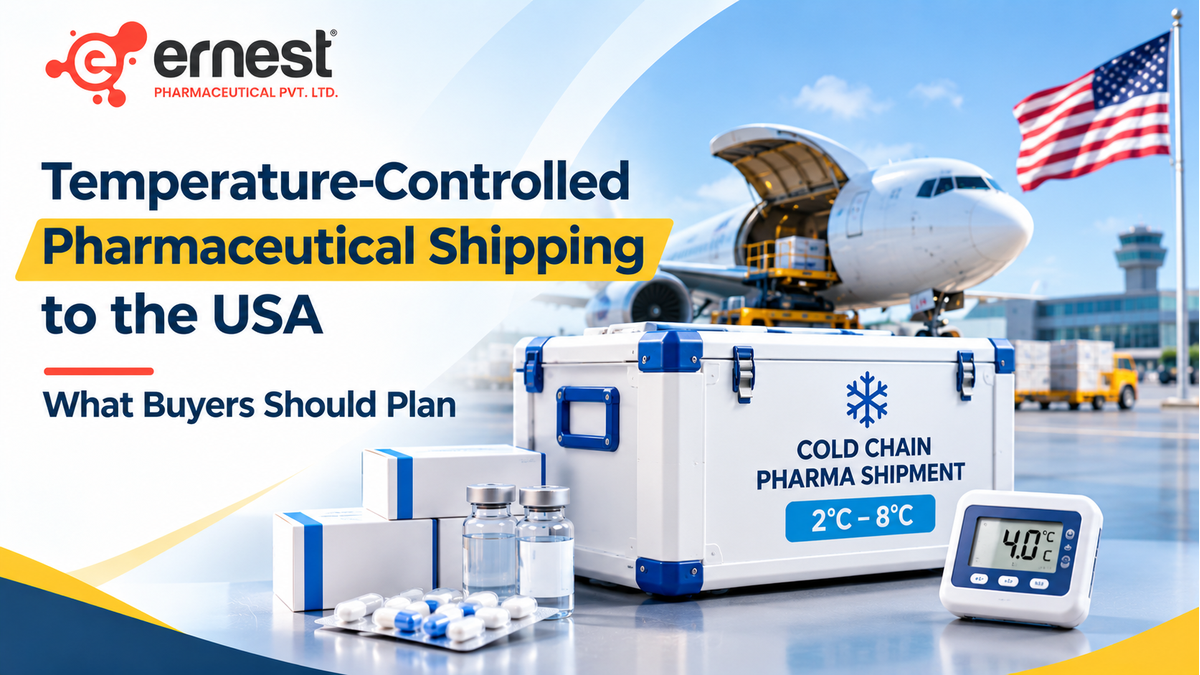
Temperature-Controlled Pharmaceutical Shipping to the USA: What Buyers Should Plan
Pharmaceutical shipments can travel through multiple countries, airports, warehouses, customs checkpoints, and distribution facilities before reaching their final destination. For medicines that require specific storage conditions, every stage of transportation must be considered carefully. A delay, unsuitable packaging arrangement, or unexpected temperature change can create a quality concern that requires investigation.
Pharmaceutical cold chain shipping USA is the planning of packaging, transportation, temperature monitoring, documentation and handling arrangements to protect temperature-sensitive medicines during international distribution. For pharmaceutical importers, distributors, wholesalers and institutional procurement teams, an understanding of these considerations prior to dispatch can help mitigate supply chain risks.
Temperature-sensitive pharmaceutical products are not shipped on a routine commercial basis and require shipment under their product-specific storage conditions and supporting stability information. Use of a refrigerated vehicle or insulated shipping box does not, by itself, demonstrate that required conditions were maintained throughout the entire journey.
This guide outlines what buyers need to consider when coordinating temperature-controlled medicine shipping to the United States — from packaging selection to transportation routes, monitoring devices, customs planning, temperature excursions and receiving procedures.
1. What Is Cold Chain Shipping for Pharmaceuticals?
Pharmaceutical cold chain shipping is the storage, handling and transportation of drugs that need to be kept in specific conditions to maintain their quality during transit.
The cold chain links different parts of the pharmaceutical supply network, such as:
- Plants for the production of pharmaceuticals.
- Packing and shipping facilities.
- Temperature-controlled storage warehouses.
- Air freight and surface transportation services.
- International distribution and transit centers.
- Customs and Border Processing Centers.
- Importers, distributors and receiving institutions.
Each party involved must be aware at each stage of the product handling instructions applicable to it and of its responsibilities to maintain the required conditions.
Some vaccines, biological products, insulin preparations, injectable medicines and other pharmaceutical products may be temperature-sensitive medicines. Not all products in these categories have the same storage requirements.
The appropriate shipping conditions must be determined from the approved labeling of the product, manufacturer instructions and applicable stability information.
Pharmaceutical Temperature Ranges (Typical)
Different drugs may have different storage and transport requirements. The list below provides general examples and not universal shipping instructions.
- Controlled Room TemperatureGeneral Example: Certain tablets, capsules, and other medicines.
- Buyer Consideration: Verify the labeled storage range and protection against excessive heat, moisture, and light.
- RefrigeratedGeneral Example: Certain vaccines, biological products, and injectable medicines.
- Buyer Consideration: Confirm the exact labeled temperature range and prevent accidental freezing where applicable.
- Frozen StorageGeneral Example: Selected specialized pharmaceutical and biological products.
- Buyer Consideration: Verify the exact freezing range, packaging configuration, and suitable transportation system.
- Ultra-Low TemperatureGeneral Example: Certain specialized biological materials.
- Buyer Consideration: Requires product-specific equipment, monitoring, handling procedures, and qualified logistics arrangements.
For example, a medicine that needs to be stored at 2-8°C requires a different transportation arrangement than a product that has to be frozen. Even if it falls within the same general category, the manufacturer’s specific instructions should take precedence.
2. Why Temperature Control Is Critical In Pharma Shipping
Temperature control is an important part of pharmaceutical supply-chain management, as exposure to the environment can alter the physical, chemical and stability characteristics of some medications.
Quality concerns can be caused by too much heat, freezing, or being stored outside the recommended conditions for a long period of time. The real impact depends on the product, how it is formulated, how long the exposure is, and what stability information is available.
Keeping up product quality
Medicines are produced and stored under defined conditions to guarantee their specified quality throughout their approved shelf life.
If the transportation conditions are not adequate, some products may change, and this change cannot be detected by visual inspection only. Therefore, the external appearance of the pharmaceutical packaging should not be used by buyers as the only criterion to judge the suitability of a temperature-sensitive medicine.
Avoiding Temperature Excursions
A temperature excursion is when a pharmaceutical product is exposed to temperatures that fall outside of its defined storage or transport conditions.
Excursions may happen due to the following reasons:
- Delays at airport or customs not anticipated.
- Breakdown of refrigeration equipment.
- Wrong packaging or location of refrigerant.
- Bad handling when loading and unloading.
- Increased waiting times at public transport facilities.
- Power outages at storage sites.
- Extreme weather conditions in the season.
Not every trip automatically means that a medicine has become unusable. However, all relevant deviations must be documented and evaluated using an appropriate quality process based on product-specific stability information.
Holding the supply chain to account
Temperature sensitive pharmaceuticals may pass through several organizations. Responsibility can shift from one party to another – manufacturer, exporter, freight forwarder, customs broker, importer, receiving facility.
Defining clear responsibilities as to who will monitor the shipment, who will respond to delays, who will review temperature records and who will make the quality decision if an excursion occurs.
3. Selecting the Proper Temperature-Controlled Packaging
Packaging is one of the most important considerations when shipping temperature controlled medicines. Packaging configuration should be chosen to meet the product’s requirements, size of the shipment, length of time in transit and anticipated environmental conditions.
Buyers should not assume that one insulated shipping box or refrigerant setup will work for all pharmaceutical products.
Shipping Containers Insulated
Insulated shipping containers are designed to reduce heat transfer between the outside world and the pharmaceutical product inside.
These systems may vary in composition depending on the shipment and may include insulated panels, protective liners, temperature stabilizers and adequate outer packaging.
The overall shipping configuration should have qualification evidence appropriate to support performance for the intended payload, duration and expected environmental conditions.
Phase Change Materials and Gel Packs
Gel packs and phase-change materials are used in passive temperature-controlled packaging systems to help maintain set conditions during transit.
The packaging configuration that is qualified should contain such materials in the type, quantity, condition and position as specified.
Incorrect placement can lead to local temperature differences. Direct contact between frozen refrigerants and products which are not to be frozen may present a risk of freezing.
Containers with active temperature control
Active temperature-controlled containers use powered systems to keep the internal environment stable during transport.
Depending on the equipment and shipment requirements, they may also offer temperature control, monitoring and alarm functions.
Buyers should investigate the operating range, power arrangements, equipment availability, maintenance requirements and contingency procedures before selecting an active system.
Packaging Testing & Qualification
Packaging qualification determines whether a shipping configuration can maintain required conditions during defined transportation scenarios.
The relevant assessment factors are:
- Requirements for product temperature.
- Payload size, weight and disposition.
- Insulation material and enclosure design.
- Type of refrigerant and conditioning process.
- Estimated transit time.
- Temperature conditions in terms of seasons and geographical locations.
- Potential delays from customs and shipping.
- Loading, unloading and handling procedures.
The qualification should be based on realistic conditions of shipment and not on the general description of packaging by the manufacturer.
4. Planning the route for shipping pharmaceuticals to the US
Shipping pharmaceuticals internationally is more than just picking an airline or freight forwarder. The entire transportation route has to be reviewed to determine where temperature control risks may arise.
Buyers for pharmaceutical cold chain logistics USA should consider the origin facility, departure airport, transit hubs, customs processing points and final delivery location before confirming a shipping arrangement.
Air Freight & Ground Transportation
On an international basis, air freight should be considered when transit time, route availability, product requirements and operational arrangements dictate its suitability for pharmaceutical shipment.
Air transportation, however, does not automatically ensure temperature control. Products can still be exposed during airport handling, cargo transfers, loading, unloading or temporary storage.
Ground transportation may also be necessary to move products between the manufacturer, airport, warehouse, customs facility and the final receiving location.
Buyers should be aware of how the environmental conditions will be controlled at each stage of the transport.
Risk Assessment by Season and Geography
The weather conditions can be very different across the United States. The issues involved in handling a shipment arriving in an area with extreme summer temperatures may be different to those involved in handling a shipment arriving in winter.
International routes may also traverse multiple climate zones to reach their destination.
Therefore in planning routes one should consider:
- Anticipated ambient temperatures at origin and destination.
- Extreme temperatures of the season.
- Handling arrangements at airports and warehouses.
- Transit time and connecting flights.
- Delivery times on weekends and holidays.
- Potential delays from traffic, weather and customs.
- Suitable storage is available in transit and receiving facilities.
Creating Contingency Plans
A good shipping plan should provide for alternative arrangements in the event of unexpected disruptions.
For example, should a flight be cancelled or customs clearance take longer than expected, the parties need to know where the shipment can be stored under appropriate conditions and who is responsible for arranging the necessary response.
Contingency planning may include alternate transportation routes, approved storage sites, emergency contacts, replacement monitoring devices and escalation procedures.
5. Temperature Loggers And Monitoring
Temperature monitoring gives insight into the environmental conditions that a pharmaceutical shipment has been exposed to during its transport.
The monitoring arrangement shall be selected based on the product, shipping configuration, transportation route and applicable quality procedures.
What Is a Pharma Temperature Data Logger?
A temperature data logger is a device that records temperature readings over a specified time period. Depending on the model it may take readings at programmed intervals and provide information that can be reviewed after delivery.
Some devices may also have alarms or remote monitoring capabilities, depending on their design and connectivity.
Key Data Logger Considerations
- Calibration: Monitoring devices should be supported by appropriate calibration evidence for the intended operating range.
- Location: Device location shall be based on qualified packaging configuration and monitoring plan.
- Recording intervals: The recording frequency should be suitable for the shipment and the anticipated risks.
- Operating range: The device must suit the anticipated temperature conditions.
- Data retrieval: The receiving team should be aware of how to access and review the recorded information.
- Record retention: Temperature records shall be maintained in accordance with applicable procedures and contractual requirements.
Continuous Tracking & Shipment Visibility
Some transportation systems use interconnected monitoring systems that provide temperature information in transit.
Authorized parties can use such systems to identify potential problems earlier and coordinate a response prior to delivery.
But monitoring tech is only one piece of cold chain management. It’s no substitute for proper packaging, trained handling, route planning and quality control.
6. How to Manage Temperature Excursions in Pharmaceutical Shipping
Temperature excursions are a major risk in pharmaceutical transport. The deviation can be during storage, at the airport, during international transit, customs, or final delivery.
Buyers should have a defined process for the identification, documentation, investigation and resolution of temperature related deviations.
Causes of Temperature Excursions Common
- Breakdown of refrigeration system.
- Poorly conditioned cooling materials.
- Packaging performance is not enough for the real journey.
- Unforeseen customs or other delays in transit.
- Incorrect loading/unloading procedures.
- Exposure to extreme temperatures outside the body.
- Power or system monitoring failures.
What Can Buyers Do After a Temperature Excursion?
If a temperature excursion is suspected on a shipment, the affected product must be managed according to the applicable quality procedures.
A typical response framework might include:
- Identify the deviation: Check the temperature record, shipment details and monitoring alerts available.
- Segregate affected stock: Quarantine or hold under suitable procedures, the affected product where necessary.
- Document the event: Note duration, temperature range, stage of shipment and any available supporting information.
- Notify relevant parties: Notify the responsible manufacturer, quality unit, importer or other designated party.
- Conduct a product-specific assessment: Use available stability information and actual conditions of exposure.
- Get a documented quality decision: The next step must be defined by the responsible quality function or person responsible and be duly authorized.
Do not assume that because food looks normal after exposure to an unsuitable temperature, that it is still good to eat.
Similarly, a temperature excursion should not be considered as evidence that all affected product has lost its quality. The decision must be supported by sufficient product-specific evidence.
7. US Regulations and Quality Considerations for Temperature Controlled Shipments
Pharmaceutical shipments into the United States must comply with the regulatory requirements applicable to the specific product and transaction. Temperature control is an important part of product quality management, but not a deciding factor on its own for a medicine to be eligible for import or commercial distribution.
FDA Requirements for Drug Storage and Distribution
The US Current Good Manufacturing Practice regulations contain provisions relating to warehousing and distribution procedures for drug products.
Written procedures for warehousing should be established to provide proper storage conditions (e.g., temperature, humidity, and light) to protect the identity, strength, quality, and purity of the drug product, as stated in 21 CFR 211.142.
The written procedures for distribution of drug products are discussed in 21 CFR 211.150.
These provisions are relevant to the understanding of pharmaceutical storage and distribution controls, but their application depends on the regulated establishment and activities involved.
Buyers may want to look at the official 21 CFR 211.142 warehousing procedures and 21 CFR 211.150 distribution procedures.
Good Distribution and Storage Practices
Good storage and distribution practices provide the framework for maintaining proper conditions as medicines move through the supply chain.
The United States Pharmacopeia (USP) addresses risks and mitigation strategies for finished drug-product storage and transportation in General Chapter 1079.
Other guidance includes temperature and humidity monitoring, transportation risks and the significance of upholding appropriate product conditions.
Buyers can refer to USP General Chapter 1079 for more information.
Customs Coordination and Documentation Import
For temperature-controlled shipping, commercial, transport and regulatory information also needs to be properly coordinated.
Applicable records may include, depending on the product and the shipment:
- Commercial invoice and packing details.
- Product identification and appropriate label information.
- Details of manufacturer and supplier.
- Applicability of regulatory and import information.
- Records of transportation and shipment tracking.
- Records of temperature monitoring, if any.
- Appropriate quality documentation and deviations records.
The documentation required will vary depending on the product and the applicable import requirements. Buyers should coordinate with their customs broker and qualified regulatory professionals before shipment.
For a more detailed overview of US pharmaceutical import considerations, read our guide to US pharmaceutical import documents and the B2B buyer checklist.
8. What pharmaceutical buyers should check before shipment
Before setting up international temperature controlled medicine shipping, buyers should ensure that the product, supplier, shipping route, packaging configuration and receiving arrangements have been fully assessed.
The checklist below can help you structure your discussions prior to shipment.
Pre-Shipment Planning Checklist for Cold Chain
- Product Requirements: Approved storage conditions, temperature range, freezing sensitivity, and relevant handling instructions.
- Packaging: Suitable packaging configuration, qualification evidence, refrigerant arrangement, and expected protection duration.
- Transportation Route: Origin, destination, transit hubs, transportation mode, estimated journey duration, and seasonal risks.
- Monitoring: Suitable temperature monitoring arrangements, calibration evidence, data access, and review responsibilities.
- Supplier Coordination: Manufacturer, exporter, logistics provider, importer, and receiving-party responsibilities.
- Customs Planning: Applicable entry requirements, customs broker coordination, expected clearance arrangements, and delay contingencies.
- Receiving Procedures: Authorized receiving personnel, suitable storage availability, shipment inspection, and temperature record review.
- Excursion Management: Deviation reporting, quarantine arrangements, product-specific stability assessment, and documented quality disposition.
This checklist is a generic planning framework. It should be specific to the medication, transport arrangements, destination and relevant regulatory requirements.
9. Collaboration With Pharmaceutical Suppliers and Logistics Partners
The success of pharmaceutical transportation is dependent on the coordination between the parties involved. Buyers should set clear expectations with suppliers and logistics providers before confirming a shipment.
Supplier’s Product Information Review
Buyers would be expected to ask for relevant product information such as product name, composition, strength, dosage form, manufacturer details, batch particulars, expiry details and applicable storage instructions.
Please review the available documentation to ensure consistency with the product and proposed transaction.
Discuss Transportation Responsibilities
Before dispatch, parties should agree who is responsible for packaging, booking transportation, monitoring temperature, tracking shipment, coordinating customs and ensuring final delivery.
When third party logistics providers are involved, buyers should be clear about the services being provided and the evidence available to support the handling arrangements agreed.
Confirm Receipt Arrangements
Temperature-sensitive medicines should not be delivered to a destination where appropriate storage and receiving procedures are not available.
The receiving organization should identify the recipient of the shipment, confirm packaging, check appropriate temperature documentation and move the product to the proper storage environment.
These measures are of particular importance when deliveries are made on weekends, holidays or outside of normal working hours.
For more details on how to organize your suppliers and how to use direct dispatch, please read our guide to dropshipping services in the pharmaceutical sector.
10. Common Errors to Avoid in Pharmaceutical Cold Chain Logistics
Cold-chain planning can be difficult if buyers concentrate only on transportation speed or packaging appearance rather than the entire shipment process.
Common mistakes include:
Same packaging for all products
Different medicines have different temperature limits, freezing sensitivities and handling requirements. Shipping configuration and packaging should be selected for the specific product.
Express Delivery Guarantees Temperature Control
“Faster transportation may decrease the length of the journey, but that doesn’t necessarily avoid temperature excursions.” Taking into account the airport handling, the customs delays, and the conditions of temporary storage.
Customs and Transit Delays Overlooked
If you’re shipping pharmaceuticals internationally, customs or transit facilities may require additional processing time. The transportation plan must include realistic delays and appropriate contingency provisions.
Not Checking Temperature Records
Temperature monitoring is only useful if the records are available and are reviewed and related to an appropriate quality process. “It’s not enough to just put a data logger inside a shipment to complete the monitoring process.
Products Received Without Receiving Procedure
Buyers should determine who will inspect the shipment, review temperature information and transfer the medicine to the appropriate storage conditions after delivery.
Addressing these issues prior to dispatch can enable more reliable pharmaceutical supply-chain planning.
Conclusion
Pharmaceutical cold chain shipping USA requires meticulous coordination between the product requirements, packaging, transportation, monitoring, customs planning, and receiving procedures. Medicines that are sensitive to temperature must be transported in accordance with their approved storage conditions and available product-specific stability information.
Choosing the right shipping configuration, reviewing transportation routes, understanding temperature monitoring setups, preparing for customs delays and developing a written response to temperature excursions are among the most important planning priorities for pharmaceutical buyers.
“There’s more to good cold-chain management than just packaging and quick transport. It relies on a coordinated process between suppliers, logistics partners, importers and receiving organizations.
For companies involved in international pharma supply agreements, early discussions around product specifications, handling requirements, documentation and delivery responsibilities can help identify possible problems before shipping.
Frequently Asked Questions
1. What is cold chain shipping in pharmaceuticals?
Pharmaceutical cold chain shipping is the controlled transportation and handling of medicines that must be maintained under specific environmental conditions. This includes suitable packaging, transportation planning, monitoring and handling processes to support product quality through distribution.
2. What temperature is needed for pharmaceutical cold chain shipping?
There is no single temperature range for all pharmaceuticals. Some drugs need to be refrigerated, some need to be frozen, some need to be kept at ultra-low temperatures and some need to be kept at controlled room temperatures. The requirements applicable to the product are those set forth in the approved labeling and manufacturer instructions.
3. How Are Temperature Sensitive Medicines Shipped to the USA?
Temperature sensitive Medicines are packaged and transported as per their product requirements. Depending on the shipment, this may include qualified insulated containers, refrigerated transport, temperature monitoring devices, appropriate documentation and planned customs coordination.
4. What is a temperature excursion in pharma shipping?
A temperature excursion is an exposure of a pharmaceutical product to conditions outside the defined storage or transportation range. The event should be documented and evaluated against the relevant product-specific stability information before a quality decision is taken.
5. Do I require temperature data loggers for pharma shipments?
Environmental conditions during pharmaceutical transportation are typically recorded using temperature data loggers. The product, the shipping system, the evidence of qualification, the quality procedures and the applicable requirements determine what monitoring is needed and what device to use.
6. What to look for when buying from international cold chain suppliers?
Buyers are cautioned to confirm product storage conditions, packaging qualification, route of shipment, anticipated time in transit, temperature-monitoring provisions, customs requirements, receiving facilities, and temperature-excursion procedures.
7. What if a pharmaceutical shipment goes out of the allowable temperature range?
The affected product should be handled according to appropriate quality procedures, which may include quarantine, documentation, notification and a product-specific stability assessment. The product should be released or used only after a documented decision by a qualified responsible person.
8. Does Cold Chain Transportation Ensure Pharmaceutical Cold Chain Compliance?
Nope. Refrigerated transport is only one part of the process. Consideration must also be given to product specific requirements, packaging suitability, route qualification, monitoring, handling procedures and receiving arrangements.
A Note to Pharmaceutical B2B Buyers
International pharmaceutical sourcing is more than just product availability and commercial terms. Buyers should be aware of the storage requirements, transportation arrangements, product documentation and responsibility of the organizations involved before confirming a shipment.
Ernest Pharmaceuticals information on pharmaceutical business and product portfolio. If you’re a business wanting to make international pharmaceutical supply arrangements, take a look at the range of pharmaceutical products available and talk to the company about your product and destination requirements.
For business enquiries related to pharmaceutical sourcing and international supply requirements, please visit the Ernest Pharmaceuticals contact page.
Quality and Regulatory Disclaimer
The article is for general educational and informational purposes only. This does not constitute legal, medical, customs, logistics or regulatory advice. The temperature ranges, packaging configurations, monitoring requirements and transportation arrangements shall be assessed in relation to the specific medicine, its approved labelling, the supporting stability information and applicable regulations. This article does not certify any product, supplier, shipment or carrier as being compliant with FDA or other regulatory requirements. Buyers should seek advice from the relevant authorities and appropriately qualified pharmaceutical quality and regulatory professionals before arranging temperature-sensitive pharmaceutical shipments.