Importing Pharmaceutical Products into Hong Kong: B2B Guide
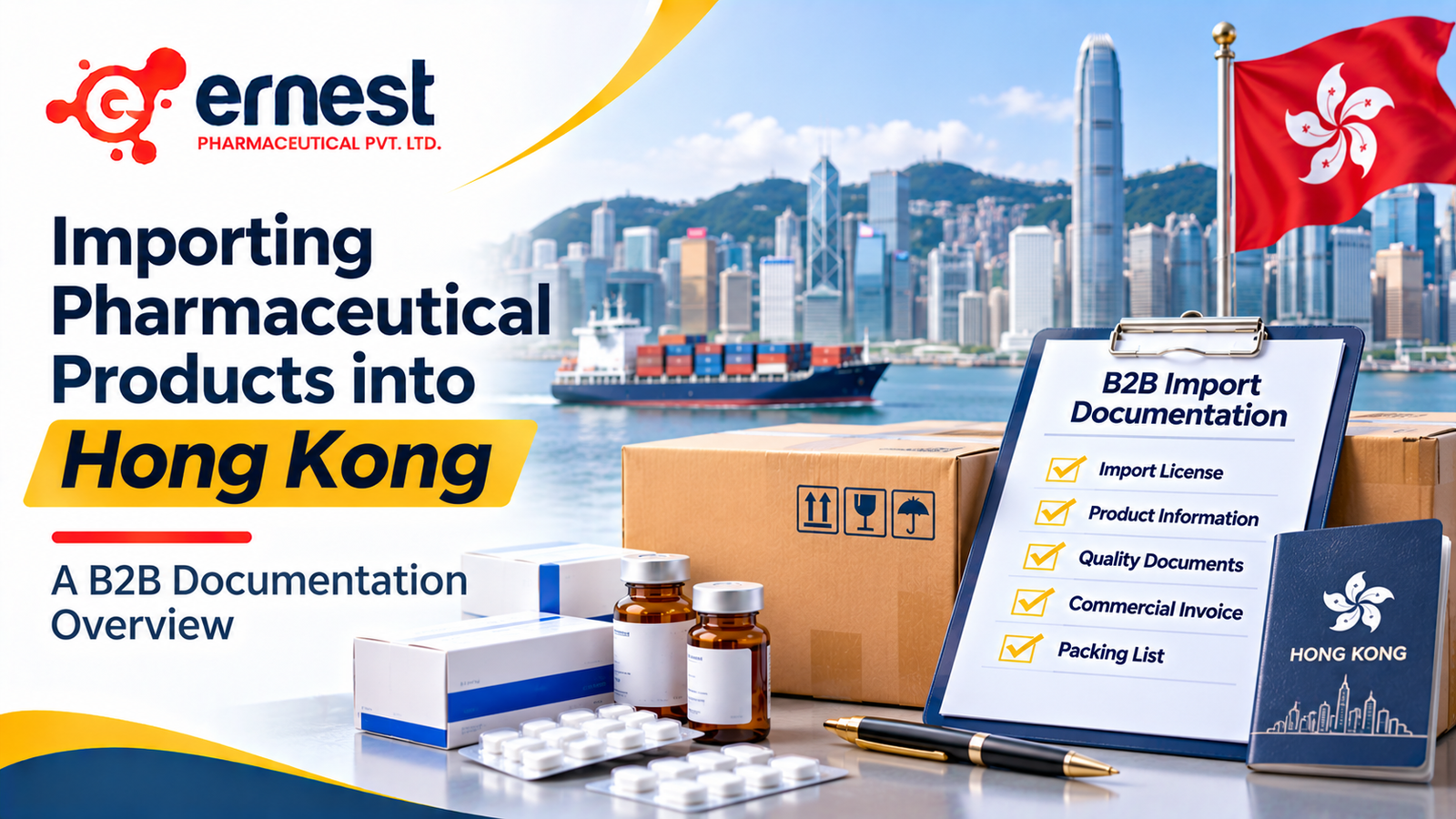
Importing Pharmaceutical Products into Hong Kong: A B2B Documentation Overview
Introduction
Hong Kong is an important pharmaceutical trading and distribution market in Asia. For international manufacturers, exporters, importers, wholesalers and distributors, entering this market requires proper regulatory preparation and accurate shipment documentation. Businesses must understand the applicable trader licensing requirements, product registration rules and import procedures before arranging pharmaceutical shipments.
To import pharmaceutical products Hong Kong, businesses need to consider the requirements administered by the Hong Kong Department of Health, particularly the Drug Office. The regulatory framework includes the Import and Export Ordinance (Cap. 60), Pharmacy and Poisons Ordinance (Cap. 138), Antibiotics Ordinance (Cap. 137) and Dangerous Drugs Ordinance (Cap. 134).
A key point for B2B businesses is that a trader licence, a shipment-specific import licence and product registration serve different purposes. Having one does not automatically replace the others.
This guide explains the main licensing, documentation and shipment considerations for pharmaceutical businesses planning to supply or distribute medicines in Hong Kong.
1. Understand the Import Requirements for Pharmaceuticals in Hong Kong
Businesses should verify that their products are pharmaceutical products under the laws of Hong Kong before making an import arrangement.
The regulatory definition includes chemicals or combinations of substances that are offered for treating or preventing disease, changing physiological processes by pharmacological, immunological or metabolic action, or for making a medical diagnostic. We also have advanced therapeutic products.
The initial screening for pharmaceutical importers should include:
- Product classification: Indicate if the product is classified as pharmaceutical product, poison, antibiotic or dangerous drug.
- Product registration: Verify if the drug is registered in Hong Kong for the intended commercial purpose.
- Trader licensing: Determine the licence according to the importer's business activity.
- Shipment permission: Verify if an import licence is necessary for the particular shipment.
- Special controls: Check if additional authorizations are required for controlled drugs or certain product classes.
Businesses should not assume that the standards are the same for all medicines. The method may differ depending on the product classification, intended usage and the nature of the transaction.
You should consult the official Hong Kong Drug Office import and export advice before you start.
2. Hong Kong Trader Licensing and Import Licence for Pharmaceuticals
Hong Kong pharmaceutical import licence is a key need for business introducing regulated pharmaceutical products into the territory. But first, importers need to know the difference between a business level trader licence and individual cargo import permit.
Dealer License Wholesale
A Wholesale Dealer Licence (WDL) is usually required for businesses that engage in wholesale dealing or importing of pharmaceutical products and relevant poisons.
Depending on the product category and the business activity you might need to get additional permissions.
- Wholesale Dealer Licence: Insures wholesale dealing and import/export activities related to pharmaceutical products and poisons as appropriate.
- Antibiotics Permit: Required in addition to the appropriate Wholesale Dealer Licence for enterprises dealing in chemicals covered by the Antibiotics Ordinance.
- Dangerous Substances Wholesale Dealer's Licence: Required for relevant wholesale trading in dangerous substances.
- Manufacturer’s Licence: This is applicable to enterprises engaged in pharmaceutical manufacturing activities.
The permissions required are determined by the product classification and the activities performed. Rather than assuming that a broad wholesale licence covers all medicines, importers should check their licensing position.
Licence to Import a Specific Consignment
Each import of pharmaceutical products requires a separate import license. The Import Licence Form 3 is the paperwork applicable for normal imports of pharmaceutical products.
Applications are submitted through the Drug Office’s Pharmaceuticals Licence Application and Movement Monitoring System (PLAMMS).
Key considerations for importers include:
- The applicant must possess the appropriate drug trader licence.
- PLAMMS is used for submitting relevant import licence applications.
- Each import licence granted is valid for one shipment only.
- Separate shipments require separate applications.
- “The licence particulars should correspond with the actual shipment particulars.
- Applications can be filed before the date of scheduled arrival.
The Drug Office PLAMMS FAQs clarify the application process and regulations relevant to a consignment.
3. Registration of Pharmaceutical Products in Hong Kong
Import licensing and product registration are two separate regulatory requirements. An import licence does not immediately confer the right to sell or distribute a drug in Hong Kong.
Generally, pharmaceutical items must be registered prior to sale, offer for sale, distribution or possession for sale or distribution in Hong Kong under Regulation 36(1) of the Pharmacy and Poisons Regulations (Cap. 138A) .
The registration process takes into account the safety, efficacy and quality of the pharmaceutical product.
Before scheduling business shipments, importers should check:
- If the product is duly registered in Hong Kong.
- Whether the product name, potency and dose form are matching with registration details.
- Manufacturer and product details are checked against the records available.
- Whether the importer is the holder of the registration certificate or has the requisite authorization.
- We also verify if the goods is covered by any special import arrangements.
Where the goods is manufactured outside Hong Kong, the licensed wholesale dealer importing the product or an appropriate Hong Kong representative or distributor may be responsible to make the application for registration depending on the arrangement.
Exceptions and special agreements may apply, including for import for the treatment of a particular patient or for other allowed uses. Such instances should be considered on their own merits against the relevant Drug Office standards.
Importers can refer to the official drug registration information of the Hong Kong Drug Office for product registration information.
4. Required Documents for Importing Essential Drugs for B2B
Proper preparation of drug import documentation is a critical part of planning for pharmaceutical shipment. The importer, exporter, freight forwarder and other stakeholders shall guarantee consistency of product and shipping information in applicable records.
The precise documentation will vary according to the product, the transaction, the purpose of the import and any applicable regulatory requirements. Typical documents to organize include:
A. License to Import Form
- Approved import licence issued through relevant process.
- Full name and address of importer.
- Exporter details overseas.
- Product description and quantity.
- Transportation and date of expected arrival.
- Appropriate declaration for local consumption or re-export.
B. (continued) INVOICE SALES
- Details of exporter and importer.
- Invoice Number and Date
- Product name and description .
- Quantity, unit price, total value.
- Currency and payment details.
- Country of origin, if applicable.
C. Packing List
- Number of cartons or parcels.
- Product name and quantity.
- Descriptions of Packages.
- Batch details, if available.
- Net and gross weight if applicable.
- References and signs of packages.
D. Bill of Lading / Air Waybill
The transport document should identify the shipment and other important transit details of the shipment.
This may be an Air Waybill for air freight or a Bill of Lading for maritime freight, depending on the mode of travel.
E. Product & Quality Documentation
Depending on the product and the transaction, supporting records may consist of:
- Certificate of Analysis (CoA).
- Product specs.
- Product information or box leaflet.
- Manufacturing / Batch Details.
- Certificate of product registration or equivalent authorization.
- Manufacturing and quality paperwork as applicable.
- Storage and transport requirements.
A Certificate of Analysis gives analytical information for a given batch. It is not a substitute for the compulsory product registration, trader's licence or import licence.
Buyers should read Ernest Pharmaceuticals’ guide to Certificate of Analysis in Pharmaceutical Procurement for more information on batch-specific quality records.
5. Drug Office Import Licence Application
The Drug Office import licence application requires correct details about importer, exporter, products and transportation. Incomplete or conflicting information may result in further clarification and administrative delays.
Eligible registered users submit applications for the applicable pharmaceutical import licence through PLAMMS.
Importer & Exporter Information
The application should include:
- Full name and address of the importer.
- Business Registration Number of Hong Kong (Relevant)
- Full name and address of overseas exporter.
- Fix country information.
- Details corresponding to the commercial and shipping documents.
Shipping information
Importers are requested to provide the expected arrival date, mode of transport and available shipment references.
Other information can include:
- Details of the flight, vehicle or craft.
- Marks of shipment.
- Container numbers where applicable.
- Number and type of packages
- Description of product and shipment.
Product Description & Quantity
The drug should be properly identified in the package description. Relevant information may be brand name, common name or chemical name, strength and dosage type.
The quantity and unit should be expressed precisely, using relevant units such as tablets, millilitres or grams.
Declaration and Authorisation
The importer should declare whether the products are intended for local consumption or re-export. Where products are intended for re-export, the destination should be identified.
The application should be completed and signed by an approved company representative in line with the applicable instructions.
Importers should check the official Drug Office guide to completing import and export licence forms for the latest application requirements.
6. Additional Requirements for Antibiotics and Dangerous Drugs
Some pharmaceutical items are subject to additional restrictions. Importers should identify the product classification before organizing a shipment.
Antibiotics
Businesses dealing in substances covered by the Antibiotics Ordinance may require an Antibiotics Permit in addition to the necessary Wholesale Dealer Licence.
The importer should check that the required permission is valid for the proposed business activity.
Hazardous Drugs
Dangerous substances are governed by the Dangerous substances Ordinance. In addition to the applicable dangerous medication import certificate and import license, other approvals may be required, depending on the product and the transaction.
Supporting documents may be:
- Applicable product registration data.
- Where required, authorization by the holder of the registration certificate.
- Proper licence to supply dangerous medications.
- Sales contract or purchase order, if applicable;
- Information supporting the product and the desired quantity.
If a product is both a dangerous drug and a pharmaceutical product, importers should consider the applicable regulations jointly.
Pharmaceutical Raw Material Control
Certain pharmaceutical raw materials may be controlled under the Control of Chemicals Ordinance (Cap. 145) and other regulations may apply.
Businesses that ship regulated chemicals should check applicable requirements with the relevant authorities before shipping.
7. Storage, Transport and Distribution Records
Pharmaceutical import compliance does not stop when the import licence is approved. Businesses also have to think about how drugs are going to be kept, delivered, received and distributed.
For B2B shipments, importers and suppliers should agree on who handles what before delivery.
Major operational considerations include:
- Storage: Verify temperature and environmental parameters stated for the product.
- Temperature monitoring: Ensure appropriate monitoring of temperature-sensitive drugs.
- Transport planning: Check route, transit points and temporary storage plans.
- Batch traceability: Keep records of product, batch and quantity.
- Delivery inspection: Compare the goods you receive to the purchase order and shipping papers.
- Discrepancy management: Note damaged packages, missing quantities and documentation variations.
- Record retention: Keep applicable licence, quality and shipment records.
Pharmaceutical wholesalers should also refer to the relevant Good Distribution Practice guidance issued by the Drug Office.
For additional information on recordkeeping at the batch level, please refer to Ernest Pharmaceuticals' article on Pharmaceutical Batch Traceability.
8. Common Documentation Mistakes to Avoid
Mistakes in documentation can lead to needless delays and extra work in import processing. Importers might inspect before dispatch to find irregularities.
Typical mistakes are:
- Apply for an import licence without the appropriate trader licence.
- One Form 3 licence can be used for several shipments.
- Inaccurate importer/exporter information.
- Vague descriptions of products.
- Declare wrong quantity or measurement units.
- No verification of product registration for pre-commercial distribution.
- Ignoring further authorizations for antibiotics or harmful medications.
- Providing shipping details that do not correspond to the transport documentation.
- Too close to the estimated date of arrival.
- Using a Certificate of Analysis rather than regulatory authorization.
- Not keeping approved licences and supporting papers.
Importers should correct any material discrepancies in the documentation before using the records or proceeding with the impacted shipment.
9. Pharmaceutical Importers Pre-Shipment Checklist
A checklist can allow procurement, regulatory and logistical teams to assess critical requirements before organizing an overseas shipment to Hong Kong.
Business and licensing check
- Verify the importer’s legal identification and Hong Kong Business Registration.
- Check the necessary Wholesale Dealer’s Licence.
- Check whether you need an Antibiotics Permit or dangerous drug permit.
- Confirm PLAMMS access for the approved application.
Product Verifications
- Please double check the product name, strength and dosing form.
- Commercial distribution desired in Hong Kong. Check registration status.
- Obtain any necessary authorization from the registration certificate holder.
- Determine other controls that apply to the product.
Review of Shipment Documentation
- Prepare a packing list and commercial invoice.
- Check exporter and importer details.
- Check the Bill of Lading or Air Waybill.
- Prepare appropriate batch and quality documentation.
- Apply for a separate Form 3 import license for the shipment.
- Compare the approved licence with the final shipment details.
Checks on Storage and Distribution
- Check the storage and transportation conditions.
- Supply temperature monitoring as needed.
- Develop batch traceability and reception procedures.
- Keep the applicable license and supporting records.
This checklist is a generic planning tool and is not a substitute for a product-specific regulatory assessment.
10. How Hong Kong Buyers Can Benefit from International Pharmaceutical Suppliers
International suppliers can assist Hong Kong importers by providing proper product information and paperwork before shipment.
A good B2B supply process should have straightforward communication about:
- Availability of products, specs and presentations .
- Manufacturer and/or Supplier data.
- Batch-specific quality documentation
- Availability of Certificate of Analysis.
- Product storage and handling needs.
- Packaging and labeling particulars.
- Packing and shipping time
- Documentation required for the buyer’s import process.
Buyers should additionally specify who is responsible for import licenses, product registration inspections, transportation, shipment documents and reception of products.
Ernest Pharmaceuticals' portfolio of pharmaceutical products provides pharmaceutical product and business information. Buyers can also refer to its Pharmaceutical Supplier Quality Agreement handbook for further information on supplier paperwork and quality duties.
Any proposed supply arrangement should be reviewed against the relevant requirements of Hong Kong. Supplier documentation supports the buyer’s due diligence but does not substitute the importer’s regulatory duties.
Summary
For importing pharmaceutical products into Hong Kong you will need to have the business licences, product information, shipment paperwork and any regulatory clearances in place.
“Businesses should know that a trader licence, an import licence for a specific shipment and product registration are different. For regular pharmaceutical imports the importer should check the applicable trader licence, apply for a separate Form 3 import licence for each consignment and check that the registration status of the product is suitable for the intended purpose.
Pharmaceutical companies can prepare drug import documents, check product information and coordinate with suppliers before shipping thereby decreasing needless documentation hassles and supporting a more organized B2B supply chain.
Requirements may differ depending on the product classification, import purpose and applicable legislation. Businesses are advised to consult the Hong Kong Drug Office and relevant authorities for the latest requirements before starting.
FAQ’s
1. What licence is needed to import pharmaceutical products into Hong Kong?
Businesses will normally require the relevant drug trader licence for their activity and a separate import licence for each pharmaceutical importation. The essential document for routine import of pharmaceutical products is Import Licence Form 3. Antibiotics and hazardous medications may be allowed in addition.
2. What is a Hong Kong Pharmaceutical Import Licence? A Hong Kong Pharmaceutical Import Licence is a permit that allows you to import pharmaceutical products into Hong Kong.
A Hong Kong pharmaceutical import licence is the authorization required for the import of controlled pharmaceutical items on an individual importation basis. Import Licence Form 3 is primarily used for import of pharmaceutical products and applications are processed through the Drug Office process applicable.
3. Can one Form 3 import licence cover more than one shipment?
No. Each import licence granted via PLAMMS is for a single shipment. Additional shipments require new applications by importers.
4. What are the usual required documentation for import of drugs?
Usual documents include the import licence approved, commercial invoice, packing list, Air Waybill or Bill of Lading, product details and the required quality documentation. Depending on the product and the purpose of the import, additional supporting records may be necessary.
5. Do I have to register my product before importing pharmaceuticals to Hong Kong?
Product registration and import licensing are different requirements. In general, pharmaceutical items are required to be registered before they can be sold, offered for sale or distributed in Hong Kong. Some exceptions and specific arrangements may apply.
6. Can I import pharmaceutical products with a Wholesale Dealer Licence?
No. Wholesale Dealer Licence covers necessary business activities. Each pharmaceutical importation needs its own import licence and other approvals may be relevant depending on the product category.
7. Are antibiotics and hazardous medications subject to additional licensing requirements?
Yeah. In addition to the appropriate Wholesale Dealer Licence, applicable antibiotics may also require an Antibiotics Permit. Dangerous medications have additional controls and may require relevant dangerous drug import licenses.
8. When may an importer apply for the Drug Office import licence?
Importers shall prepare and lodge the application prior to the projected date of arrival. If you apply early, you can verify shipment information and any concerns with documents that may arise before the goods arrive.